
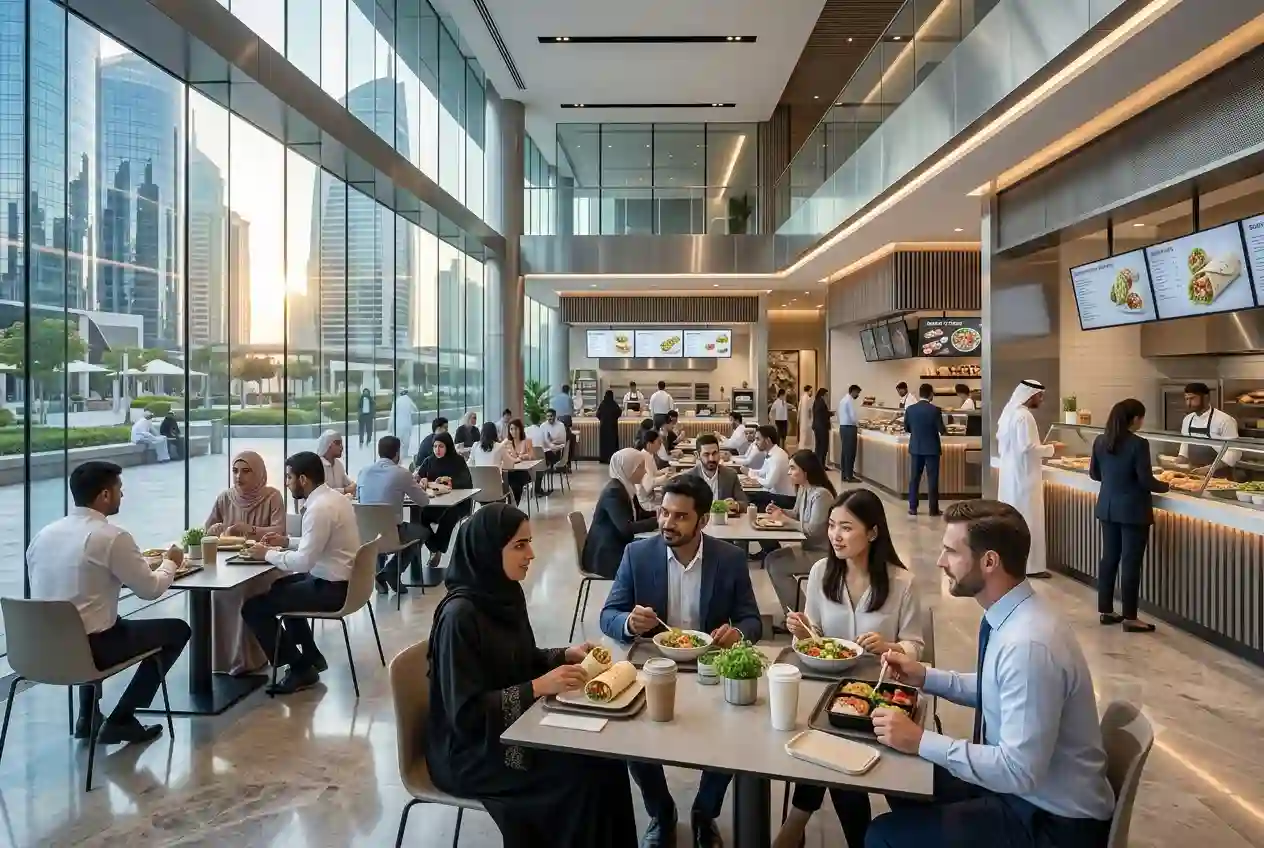

JAFZA Food Court 1 serves an important role within Jebel Ali Free Zone (JAFZA), one of the UAE’s most significant commercial and industrial hubs. Thousands of professionals, business operators, logistics personnel, and visitors move through the area daily, creating consistent demand for accessible and efficient dining facilities.
Food courts within large business districts provide more than just meal options. They support workforce productivity, offer convenient dining solutions, and contribute to the broader food service ecosystem that keeps major economic zones operating efficiently.
As JAFZA continues to attract local and international businesses, facilities such as JAFZA Food Court 1 remain essential components of the area’s infrastructure.
Understanding the Importance of JAFZA
Jebel Ali Free Zone is recognized as one of the Middle East’s leading business and logistics centers. Home to companies from multiple industries, the zone serves as a strategic gateway for regional and international trade.
The concentration of offices, warehouses, manufacturing facilities, and logistics operations creates a substantial demand for support services, including transportation, retail, hospitality, and food service.
Food courts help meet this demand by providing centralized dining locations that can efficiently serve large working populations throughout the day.
What Makes JAFZA Food Court 1 Important?
In large business environments, employees and visitors require quick access to meals without spending excessive time traveling outside their workplace area. JAFZA Food Court 1 helps address this need by bringing multiple food options together within a convenient location.
Key benefits of food court facilities include:
- Convenient meal access
- Reduced travel time during work hours
- Multiple cuisine choices
- Affordable dining options
- Support for large workforce populations
- Improved workplace convenience
These advantages make food courts an important part of daily operations within large commercial zones.
The Role of Food Courts in the UAE Dining Industry
Food courts have become a popular dining model throughout the UAE. They can be found in shopping malls, business parks, transportation centers, universities, and free zones.
Unlike standalone restaurants, food courts provide visitors with access to multiple food vendors in a shared dining environment. This format offers flexibility and allows customers to choose from different cuisines and meal options in one location.
The concept aligns particularly well with modern urban lifestyles, where convenience and variety are highly valued.
Supporting Fast Food and Quick-Service Dining
Many food court operators focus on serving customers who require fast, reliable meal options. This makes quick-service restaurants a common feature within such facilities.
The operational requirements of a fast food restaurant often align perfectly with food court environments. Speed, efficiency, menu consistency, and customer convenience are all critical factors in delivering a positive dining experience.
As workforce populations continue to grow, demand for quick-service dining solutions is expected to remain strong.
Food Supply Chains Behind Food Courts
Although customers primarily interact with food vendors, every meal served depends on a sophisticated supply chain operating behind the scenes.
Food ingredients, packaged products, beverages, and kitchen supplies move through multiple stages before reaching food court operators. Understanding the broader food path helps illustrate how sourcing, processing, distribution, and logistics work together to support daily food service operations.
Efficient supply chains are particularly important in high-volume dining environments where consistent product availability is essential.
Wholesale Suppliers and Procurement
Food service businesses rely heavily on wholesale suppliers to maintain inventory and ensure consistent quality. Restaurants and food court vendors frequently source ingredients, packaged foods, and operational supplies through large distributors.
Organizations such as Jaleel Cash and Carry Grocery and Food Wholesale demonstrate the important role wholesalers play in supporting food businesses across the UAE.
Reliable procurement partnerships help vendors maintain operational efficiency while meeting customer expectations.
Food Processing and Kitchen Efficiency
Preparation efficiency is a major priority for food court operators. Commercial kitchens often depend on specialized equipment to handle high order volumes while maintaining consistency.
Tools such as a food processor help streamline ingredient preparation, reduce labor requirements, and improve productivity. These technologies allow kitchen teams to serve customers more efficiently during peak dining periods.
Operational efficiency remains one of the key factors influencing food service performance in busy commercial environments.
The Connection Between Food Courts and Retail Food Markets
Food courts and retail food markets often serve complementary roles within the food industry. While food courts focus on prepared meals, retail outlets provide consumers with packaged products, ingredients, and groceries.
Many modern retail destinations operate similarly to a food bazaar, offering visitors access to diverse food products from multiple suppliers and brands.
This diversity reflects the UAE’s multicultural population and strong demand for international cuisine and food products.
Packaged Food Demand in Commercial Zones
Commercial districts generate substantial demand for packaged snacks, beverages, and convenience foods. Food manufacturers play a critical role in meeting these requirements.
Businesses operating within the packaged food sector, including those discussed in Emirates Snack Foods and Emirates Snack Foods LLC, contribute to the supply of products commonly found in food service and retail environments throughout the UAE.
Convenience products continue to be an important category for workers seeking quick meal and snack options during busy workdays.
Industry Trends Influencing Food Service Operations
The UAE food service industry continues to evolve in response to changing consumer expectations and technological innovation.
Key trends currently shaping the sector include:
- Digital ordering systems
- Contactless payment solutions
- Health-conscious menu options
- Sustainable packaging initiatives
- Enhanced food safety standards
- Improved operational automation
Industry professionals often monitor developments showcased through events such as Gulfood, where emerging food service technologies and market trends are highlighted.
The Future of Dining in Business Districts
As economic zones continue expanding, demand for accessible dining facilities is likely to increase. Food courts will remain important because they offer scalable solutions capable of serving large populations efficiently.
Future developments may include greater technology integration, enhanced sustainability initiatives, and expanded menu diversity designed to meet evolving consumer preferences.
Businesses that adapt to these trends will be better positioned to serve growing workforce communities across the UAE.
Conclusion
JAFZA Food Court 1 plays an important role within one of the UAE’s most significant commercial zones. By providing convenient access to meals and supporting the daily needs of workers and visitors, it contributes to operational efficiency and workforce satisfaction.
Its success reflects broader trends within the UAE food service sector, where convenience, efficiency, quality, and strong supply chain management continue to shape the dining experience. As JAFZA grows, food service facilities will remain essential components of the area’s ongoing development.