
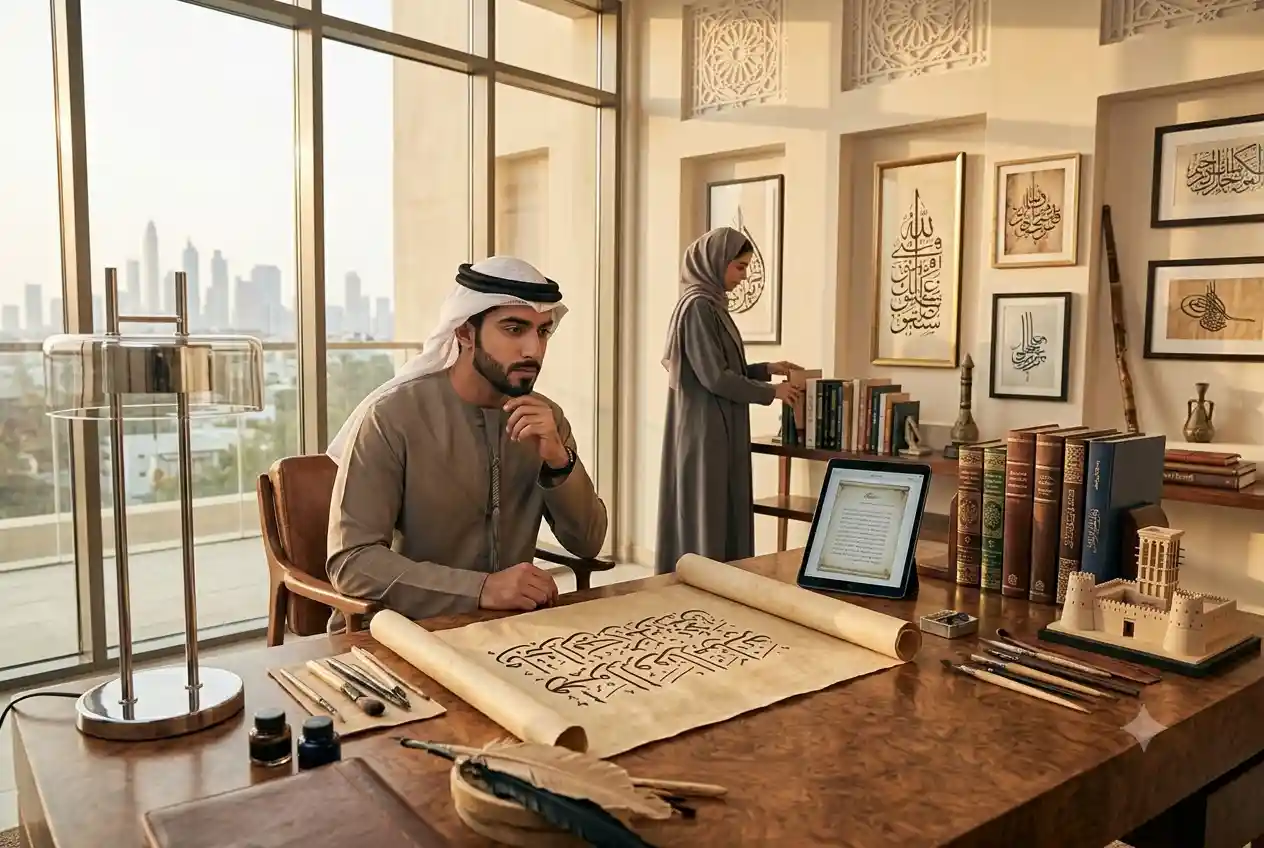

The phrase arabic of beautiful is commonly searched by people who want to understand how beauty is expressed in the Arabic language. Whether you are learning Arabic, living in the UAE, communicating with Arabic speakers, or exploring Arab culture, understanding the language of beauty offers valuable cultural insight.
Arabic is one of the world’s most widely spoken languages and contains a rich vocabulary for describing beauty, elegance, character, nature, and personal qualities. Additionally, depending on context, several Arabic words can be translated as “beautiful,” each carrying slightly different meanings and cultural nuances.
The Most Common Arabic Word for Beautiful
One of the most widely used Arabic words for beautiful is Jameel (جميل) for males and Jameela (جميلة) for females.
Generally, these words are commonly used across many Arabic-speaking countries and describe beauty, attractiveness, or something pleasing in appearance.
Examples include:
- Jameel manzar (beautiful view)
- Jameela sayyara (beautiful car)
- Jameel shakhs (beautiful person)
Furthermore, the word can apply to people, places, experiences, objects, and even ideas.
Beauty Beyond Appearance in Arabic Culture
Like many cultures around the world, Arab societies often view beauty as more than physical appearance. Character, generosity, hospitality, kindness, and respect are frequently considered important aspects of beauty.
In fact, this broader perspective closely aligns with discussions about what makes a beautiful person, where inner qualities often contribute significantly to how beauty is perceived.
Moreover, in many Arabic expressions, moral character and personal conduct are praised alongside physical appearance.
Other Arabic Words Associated with Beauty
Helo (حلو)
In many regional dialects, particularly in everyday conversation, people often use the word “Helo” or “Helwa” to mean beautiful, nice, attractive, or pleasant.
For example, it is frequently used when complimenting:
- People
- Clothing
- Food
- Homes
- Experiences
Rawaa (روعة)
This expression is often used to describe something amazing, wonderful, or stunning. Although it is not a direct translation of beautiful, it is commonly used when expressing admiration.
Fateen (فاتن)
In formal Arabic, this term may describe something captivating, charming, or enchanting.
Likewise, its usage often appears in literature, poetry, and artistic contexts.
The Importance of Beauty in Arabic Literature
Arabic literature has a long tradition of celebrating beauty through poetry, storytelling, and artistic expression. For instance, classical poets often described:
- Natural landscapes
- Personal character
- Love and relationships
- Wisdom
- Spiritual reflection
As a result, beauty frequently served as a metaphor for deeper emotional, philosophical, and spiritual themes.
Consequently, this literary tradition continues to influence modern Arabic writing and cultural expression.
Beauty in the UAE Context
The UAE combines traditional Arab culture with a highly international population. Therefore, concepts of beauty often blend local traditions with global influences.
Across Dubai, Abu Dhabi, Sharjah, and other emirates, beauty is expressed through fashion, architecture, hospitality, art, and personal presentation.
Additionally, many residents explore professional beauty services, which explains the popularity of searches for an Indian beauty salon near me and other beauty-related services throughout the country.
Beauty in Nature and Travel
The Arabic language is frequently used to describe the natural beauty of landscapes, deserts, mountains, and coastlines throughout the Middle East.
Similarly, beauty in nature remains a recurring theme across Arab culture and literature.
Travel enthusiasts often discover a comparable appreciation while exploring the most beautiful sights in the world, where natural and cultural wonders inspire admiration regardless of language or nationality.
How Language Reflects Cultural Values
Language provides valuable insight into how societies view the world. Indeed, the variety of Arabic words used to describe beauty demonstrates that beauty can be interpreted through multiple perspectives.
These perspectives may include:
- Physical appearance
- Good character
- Natural scenery
- Artistic achievement
- Hospitality and kindness
- Personal excellence
Ultimately, understanding these meanings helps language learners develop a deeper appreciation of Arab culture.
Learning Arabic Through Everyday Expressions
One of the most effective ways to learn Arabic is through practical vocabulary used in daily conversation. In particular, words related to beauty, greetings, gratitude, and everyday interactions are often among the first expressions language learners encounter.
Furthermore, regular exposure to spoken Arabic through media, conversation, and cultural experiences can accelerate language development.
Arabic Beauty and Modern Communication
Social media, digital communication, and international business have increased global interest in Arabic language learning.
As a result, professionals, students, travelers, and expatriates often seek common Arabic expressions to improve communication and strengthen cultural understanding.
In addition, in the UAE especially, even basic Arabic vocabulary can help individuals navigate daily interactions more confidently.
Beauty as a Universal Concept
Although languages may use different words, beauty remains a universal human concept. Regardless of culture, people appreciate kindness, meaningful experiences, natural landscapes, creativity, and personal authenticity.
Therefore, these shared values help bridge cultural differences while promoting mutual understanding and respect.
Important Points to Remember
The arabic of beautiful is commonly expressed through words such as Jameel, Jameela, Helo, and other related terms, each reflecting different shades of meaning and cultural context. Overall, understanding these expressions provides more than language knowledge—it offers insight into how beauty is viewed across Arabic-speaking societies.
Finally, for UAE residents, visitors, and language learners, exploring Arabic vocabulary can deepen cultural appreciation while improving communication skills. Those interested in learning more about the Arabic language can explore educational resources from the Arab Academy.
The Most Common Words for Beautiful
Arabic has a rich vocabulary for beauty, and the right word depends on what is being described. The best-known word is jameel, used for a beautiful person, place, or thing, with jameela as the feminine form. Another widely used word is haseen, which often carries a sense of elegance or loveliness. Husn refers to beauty as a quality itself, and it appears in names, poetry, and classical expressions. Learning these words together gives a fuller picture than any single translation, because each one shades the meaning slightly differently.
Context matters greatly. A sunset, a voice, a piece of calligraphy, and a kind action can all be described as beautiful, but Arabic speakers may reach for different expressions for each. A beautiful voice might be praised with words about sweetness or clarity, while beautiful handwriting is admired for its balance and flow. Paying attention to these distinctions is one of the fastest ways to sound natural rather than mechanical when speaking Arabic.
Beautiful in Everyday Conversation
In daily speech, short phrases do most of the work. Compliments are often simple and warm, offered for a meal, a home, a garment, or a newborn child. Arabic culture places value on gracious compliments and gracious responses, so learning both sides of the exchange matters. A common polite reply acknowledges the compliment with thanks and returns a kind word. Visitors to Arabic-speaking countries often find that even a small effort with these phrases is warmly received, because it shows respect for the language and its people.
Beauty in Arabic Poetry and Art
Beauty has a central place in Arabic poetry, where it describes not only appearance but character, generosity, and the natural world. Classical poets praised the beauty of deserts after rain, the grace of a horse, and the light of dawn. This tradition continues in modern songs and literature, where beauty is often linked to emotion and memory rather than surface alone. Arabic calligraphy carries the same idea visually: the beauty of a letterform is judged by proportion, rhythm, and balance, and master calligraphers spend years refining a single style.
Learning Tips for New Students
Start with listening. Hearing how native speakers use words for beautiful in real sentences teaches pronunciation and context at once. Short dialogues, songs, and children’s stories are excellent practice material. Writing the words by hand, even slowly, helps memory because Arabic script connects letters in flowing shapes. Finally, use the words in real moments: describe a beautiful view, a delicious meal, or a kind gesture. Language learned through lived experience stays far longer than words memorised from a list.
Frequently Asked Questions
What is the simplest Arabic word for beautiful? Jameel is the most common and versatile choice, with jameela for feminine subjects.
Is beauty only about appearance in Arabic? No. The language richly connects beauty with character, nature, art, and kindness.
How can I practise these words? Listen to native speech, write the words by hand, and use them in everyday compliments and descriptions.
Final Thoughts on Arabic Beauty
Learning how Arabic expresses beauty opens a door into a culture that has celebrated beauty in poetry, art, and everyday speech for centuries. Start with jameel, listen for how native speakers use each word, and practise in real moments rather than from lists alone. Language learning rewards patience and daily use, and every compliment offered in Arabic builds a small bridge between people. Beauty, in Arabic as in every language, is ultimately about attention: noticing what is good and saying so with warmth.
One more tip for learners: keep a small notebook of beautiful things you notice each day and write the Arabic word beside each one — a flower, a melody, a kind gesture, a sunset. This daily habit connects vocabulary to real experience, which is the fastest route to remembering it. Over time, your notebook becomes a personal dictionary of beauty, written in your own hand and tied to your own life. That is far more valuable than any printed list, because it reflects what beauty means to you.
