
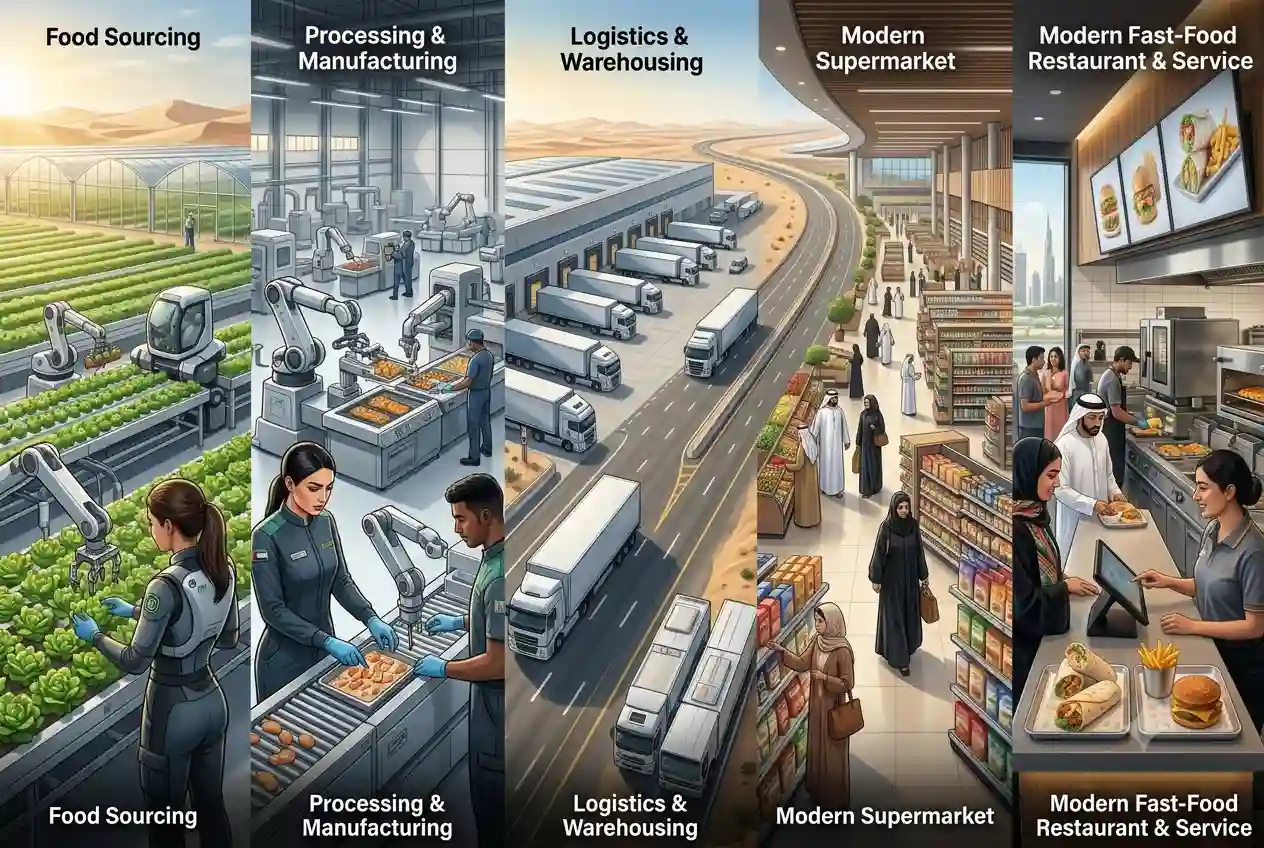

Every food product follows a journey before reaching consumers. This journey, often referred to as the food path, includes sourcing, production, processing, transportation, distribution, retail placement, and final consumption. Understanding this process is important for businesses, food professionals, and consumers who want greater transparency into how food reaches their tables.
In the UAE, the food path is particularly important due to the country’s position as a major regional trade hub. Food products arrive from global suppliers, pass through advanced logistics networks, and eventually reach supermarkets, restaurants, food courts, and households throughout the Emirates.
As food demand continues to grow, efficient supply chain management plays a critical role in ensuring quality, safety, and product availability across all sectors of the food industry.
What Is a Food Path?
The food path refers to the complete route a food product takes from its origin to the final consumer. It encompasses every stage involved in bringing food to market.
Although specific supply chains vary depending on the product, most food paths include the following stages:
- Raw material sourcing
- Production and harvesting
- Food processing
- Packaging and labeling
- Storage and warehousing
- Transportation and logistics
- Wholesale distribution
- Retail or food service delivery
- Consumer purchase and consumption
Each stage influences food quality, freshness, safety, and overall customer satisfaction.
The UAE’s Role in Regional Food Supply Chains
The UAE has developed one of the most advanced logistics and distribution infrastructures in the Middle East. Modern ports, airports, free zones, and transportation networks enable efficient movement of food products throughout the region.
This strategic position allows food manufacturers, importers, exporters, wholesalers, and retailers to efficiently manage complex supply chains. As a result, consumers benefit from access to a diverse range of local and international food products throughout the year.
The country’s infrastructure also supports growing demand across hospitality, retail, and restaurant sectors.
Stage One: Food Sourcing and Procurement
The food path begins with sourcing raw materials and ingredients. Food businesses carefully select suppliers based on quality standards, consistency, compliance requirements, and logistical capabilities.
Depending on the product category, sourcing may involve:
- Agricultural producers
- Food ingredient suppliers
- International exporters
- Local manufacturers
- Wholesale distributors
Reliable sourcing establishes the foundation for a strong food supply chain and helps ensure consistent product quality.
Stage Two: Food Processing and Manufacturing
Once ingredients are sourced, they often move into processing facilities where they are transformed into finished products. Food processing is one of the most important stages within the food path because it directly affects safety, shelf life, consistency, and consumer appeal.
Modern production facilities rely on specialized equipment to streamline operations. Businesses involved in manufacturing frequently use technologies such as a food processor and other automated systems to improve production efficiency.
Food manufacturers operating in the UAE continue investing in advanced technologies to meet growing demand while maintaining high-quality standards.
Stage Three: Packaging and Quality Assurance
Packaging serves multiple purposes within the food path. It protects products during transportation, extends shelf life, communicates important information, and supports brand recognition.
Quality assurance processes also play a crucial role during this stage. Manufacturers implement strict procedures to ensure products meet regulatory requirements and customer expectations before entering the market.
Companies involved in packaged food production, including businesses discussed in Emirates Snack Foods, depend on robust quality systems to maintain consistency across product lines.
Stage Four: Warehousing and Distribution
After production and packaging, products move into storage facilities and distribution centers. Efficient warehousing helps maintain inventory levels while ensuring products remain in optimal condition.
Food distributors coordinate transportation and delivery schedules to ensure products reach retailers and food service operators without delays. Effective distribution is particularly important in the UAE, where food businesses often serve customers across multiple Emirates.
Large-scale distributors such as Jaleel Cash and Carry Grocery and Food Wholesale play a significant role in supporting food availability throughout the market.
Stage Five: Retail and Consumer Access
Retailers represent one of the final stages in the food path before products reach consumers. Supermarkets, hypermarkets, convenience stores, specialty retailers, and online grocery platforms all contribute to food accessibility.
Consumers today have access to a broader variety of products than ever before. Many retail environments function similarly to a modern food bazaar, offering local and international products within a single shopping destination.
Retail expansion continues to create opportunities for manufacturers, wholesalers, and distributors throughout the UAE.
The Food Path in Restaurants and Food Service
The food path does not end at retail stores. Restaurants, hotels, cafeterias, and catering businesses also depend on efficient supply chains to maintain consistent service.
Fast-growing dining sectors rely on reliable sourcing, inventory management, and logistics systems to support customer demand. This is particularly important for a fast food restaurant, where speed, consistency, and product availability directly influence customer satisfaction.
Commercial dining destinations such as JAFZA Food Court 1 highlight the importance of efficient food supply systems in serving large business communities.
Technology and Food Path Optimization
Technology is transforming every stage of the food path. Digital inventory systems, automated logistics platforms, predictive analytics, and supply chain monitoring tools help businesses improve efficiency and reduce operational risks.
Food companies increasingly use real-time tracking systems to monitor product movement, improve forecasting accuracy, and enhance transparency throughout the supply chain.
These technological advancements allow businesses to respond more effectively to changing consumer demand while maintaining operational efficiency.
Industry Collaboration and Global Food Trade
The food industry depends heavily on collaboration between producers, manufacturers, distributors, retailers, and service providers. Industry events provide valuable opportunities for businesses to exchange knowledge, discover innovations, and establish partnerships.
One of the most influential food industry events in the region is Gulfood, which brings together global food sector professionals and showcases developments across sourcing, manufacturing, logistics, and retail.
Such events contribute to ongoing improvements throughout the food path and support the growth of the UAE food industry.
Why Understanding the Food Path Matters
Consumers are becoming increasingly interested in where their food comes from and how it reaches them. Transparency, sustainability, quality assurance, and responsible sourcing have become important considerations when making purchasing decisions.
Businesses that understand and optimize their food path are often better equipped to improve efficiency, reduce waste, enhance product quality, and strengthen customer trust.
As food supply chains become more complex, effective management of every stage remains essential for long-term success.
Conclusion
The food path represents the complete journey food takes from its source to the final consumer. In the UAE, this process involves a sophisticated network of suppliers, manufacturers, distributors, retailers, and food service operators working together to ensure food availability and quality.
From sourcing and processing to logistics and retail distribution, each stage contributes to a reliable and efficient food ecosystem. Understanding these interconnected processes helps businesses make better decisions while giving consumers greater appreciation for the systems that support everyday food access.