
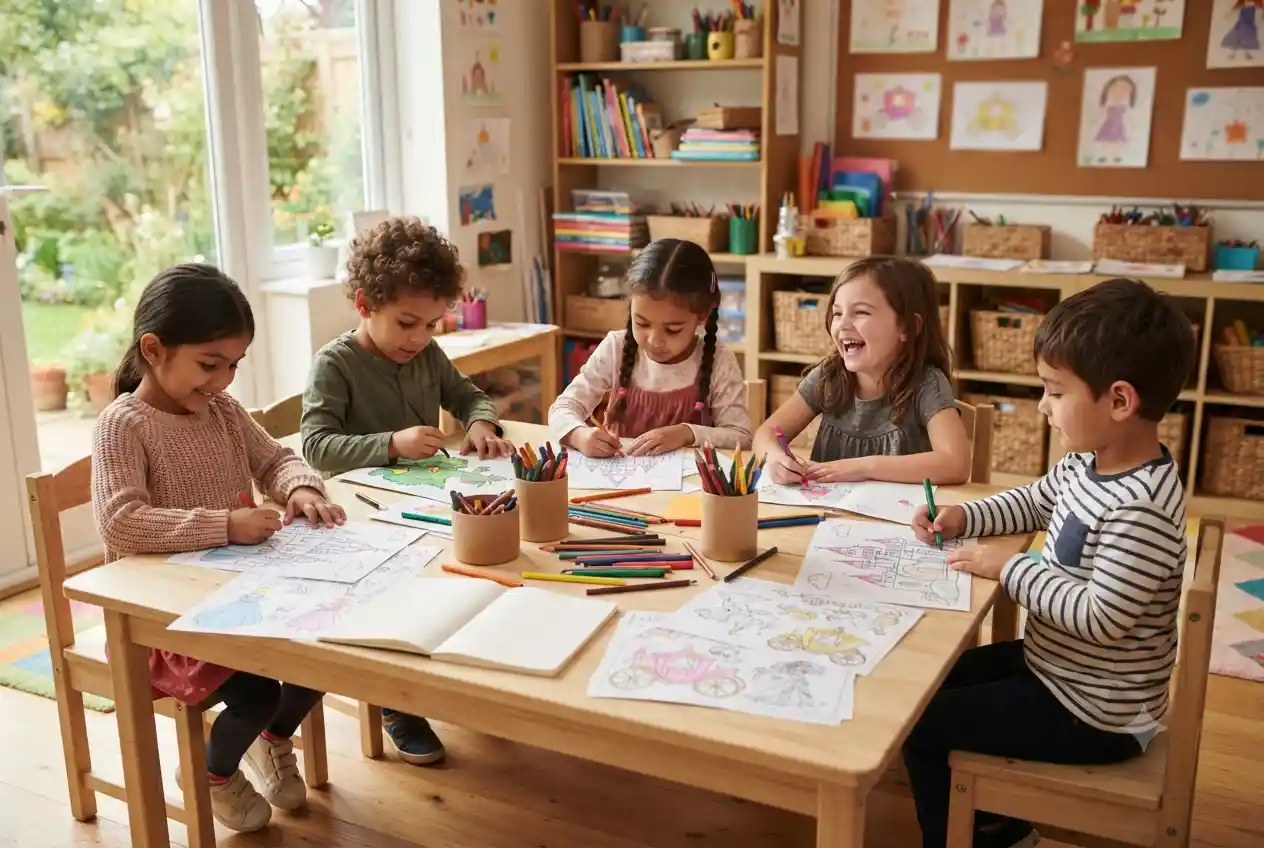

Sleeping Beauty coloring pages continue to be a favorite activity for children who enjoy fairy tales, princesses, castles, and magical adventures. Coloring offers an entertaining way for young artists to express their creativity while developing important motor and cognitive skills.
Whether you’re looking for a rainy-day activity, classroom resource, birthday party entertainment, or a relaxing weekend project, Sleeping Beauty-themed coloring sheets provide hours of imaginative fun.
Why Sleeping Beauty Coloring Pages Are Popular
The timeless fairy tale has inspired generations of readers with its memorable characters, enchanted castles, magical forests, and happy ending. Coloring pages based on this classic story allow children to recreate favorite scenes while experimenting with different colors and artistic styles.
From simple illustrations for preschoolers to detailed designs for older children, there are coloring pages suitable for nearly every age group.
Benefits of Coloring Activities
Encourages Creativity
Children can choose their own color combinations instead of following traditional illustrations, encouraging imagination and self-expression.
Develops Fine Motor Skills
Holding crayons, pencils, or markers helps improve hand strength, pencil control, and coordination.
Supports Concentration
Coloring requires attention to detail, helping children practice focus and patience while completing a picture.
Promotes Relaxation
Many children and adults find coloring to be a calming activity that reduces stress and encourages mindfulness.
Popular Sleeping Beauty Coloring Page Ideas
- Princess Aurora portraits
- The enchanted castle
- The spinning wheel scene
- The three fairy godmothers
- The magical forest
- Prince and princess scenes
- Fantasy animals and woodland creatures
- Decorative fairy tale borders
Choosing the Right Coloring Pages by Age
Preschool Children
Large outlines and simple illustrations are easier for younger children to color successfully.
School-Age Children
More detailed scenes featuring multiple characters offer an enjoyable creative challenge.
Older Kids and Adults
Highly detailed fairy tale illustrations can become relaxing art projects using colored pencils, markers, or watercolor pencils.
Creative Coloring Tips
- Experiment with different shades instead of using only traditional colors.
- Add glitter, stickers, or decorative backgrounds after coloring.
- Frame completed artwork for bedroom decorations.
- Create personalized greeting cards using finished pages.
- Mix crayons and colored pencils for interesting texture effects.
Educational Activities Using Coloring Pages
Parents and teachers can combine coloring with reading, storytelling, vocabulary practice, and creative writing exercises.
Children may also enjoy creating their own fairy tale ending after completing their artwork, encouraging imagination beyond the original story.
Printing Tips
For the best results, print coloring pages on quality paper that works well with crayons, colored pencils, or washable markers. Thicker paper is especially useful if children plan to add paint or craft decorations.
Creating a Fairy Tale Activity Day
A Sleeping Beauty theme can become part of a larger family or classroom activity by combining coloring, story reading, costume play, puzzles, and simple craft projects.
Families interested in discovering real-life castles and scenic destinations may also enjoy reading our guide to the most beautiful place on earth, where breathtaking landscapes inspire fairy-tale adventures.
Digital vs Printable Coloring Pages
Printable pages remain popular because children can use traditional art supplies, while digital coloring apps provide reusable entertainment on tablets and other devices. Both options encourage creativity in different ways.
Frequently Asked Questions
Are Sleeping Beauty coloring pages suitable for preschoolers?
Yes. Many printable designs feature simple outlines specifically created for younger children.
Can adults enjoy coloring fairy tale pages?
Absolutely. Detailed fairy tale illustrations have become increasingly popular among adults looking for relaxing creative activities.
What supplies work best?
Crayons, colored pencils, washable markers, and watercolor pencils all produce excellent results depending on the paper used.
Quick Recap
Sleeping Beauty coloring pages offer an enjoyable combination of creativity, storytelling, and skill development. Whether used at home, in classrooms, or during family activities, these printable pages continue to inspire imagination while providing hours of screen-free entertainment for children of all ages.
For additional educational activities and printable learning resources, visit Crayola, which offers a wide selection of creative ideas for families and educators.
How to Print and Prepare Coloring Pages at Home
Printing coloring pages at home is straightforward, but a few small choices make a big difference to the result. Standard printer paper works well for crayons and coloured pencils, while slightly thicker paper holds up better to markers and prevents colours bleeding through to the table underneath. If you plan to use water-based pens, placing a spare sheet beneath the page protects your furniture and lets children colour with confidence. Printing at a comfortable size matters too: a page that is too small frustrates younger children, while a larger print gives them room to practise staying inside the lines.
It is worth printing a small test batch first, especially if you are preparing pages for a party or a classroom. Check that the lines are dark and clear, that no part of the picture is cut off at the edges, and that the image suits the age of the children who will use it. Keeping a folder of favourite pages, sorted by difficulty, means you always have a suitable activity ready for a rainy afternoon. Parents looking for wider creative ideas can also explore related pages such as Beauty and the Beast colouring pages and beauty-themed guides, which offer more fairy tale and princess themes for children who love this style of activity.
Colouring as a Learning Activity
Colouring is often treated as simple fun, but it quietly supports several early learning skills. Choosing colours encourages decision making, while completing a picture builds patience and a sense of achievement. Talking about the picture as a child colours it adds language practice: naming colours, describing characters, and retelling parts of the story all happen naturally during the activity. Teachers sometimes use colouring pages as a calm start to a lesson, a reward after focused work, or a way to introduce a story before reading it together as a class.
For older children, colouring can become a more detailed art project. Shading, blending coloured pencils, and adding backgrounds such as stars, forests, or castle walls all extend the challenge. Some children enjoy creating a series of pictures that retell the whole story in order, which combines art with storytelling and sequencing skills. Families interested in learning resources more broadly may find education platform guides and modern education in Dubai useful background reading, while children’s education planning offers ideas for structuring creative time alongside schoolwork.
Party and Classroom Ideas Using Sleeping Beauty Pages
Sleeping Beauty colouring pages work beautifully at birthday parties. Set up a colouring table with a good supply of crayons, markers, and stickers, and let children choose their favourite scene. A simple competition, such as most creative colour choice or best background, adds excitement without making slower children feel left out, especially if every child receives a small prize for taking part. Finished pictures make lovely party decorations, and children enjoy taking their artwork home as a keepsake from the day.
In classrooms, colouring pages can support a fairy tale topic across several lessons. Children might colour a scene, write a caption for it, and then display the pictures in story order around the room. This turns a single activity into reading, writing, and art in one project. Teachers can also use simpler pages for younger groups and more detailed designs for older pupils, so everyone works at a comfortable level. For party planning inspiration beyond colouring, guides such as family market outings and business ideas in Dubai show how creative activities connect to wider family and community life, though the colouring table itself needs nothing more than paper, colours, and imagination.
Choosing Materials and Displaying Finished Art
The materials you choose shape the experience. Crayons are forgiving and easy for small hands, coloured pencils allow finer detail, and markers give bold, bright results. Watercolour pencils offer a nice middle ground for older children, since they can be used dry and then blended with a damp brush for a painted effect. Whatever you choose, check that materials are age-appropriate and washable where possible, and cover the work surface for younger artists. A small pencil case kept with the colouring folder means the activity is always ready to go.
Displaying finished pictures matters more than adults sometimes realise. A child whose artwork is framed, pinned to a board, or made into a greeting card learns that their effort is valued. Rotating displays keeps walls fresh, and a simple scrapbook of favourite pictures becomes a lovely record of how their skills grow over time. Some families photograph the best pieces before recycling the paper originals, keeping the memories without clutter. With good pages, suitable materials, and a little display pride, a simple Sleeping Beauty colouring sheet becomes a small creative project a child can genuinely feel proud of.
Colouring, Reading, and Early Learning Together
Colouring works best when it is connected to stories and learning rather than treated as a way to pass time. Reading the Sleeping Beauty story aloud before colouring gives children a reason to care about the picture: they know who Aurora is, why the castle matters, and what happens in the forest scene they are about to colour. After colouring, asking children to describe their picture in their own words builds vocabulary and confidence, and writing a single sentence about it turns art into early literacy practice. Teachers and parents can repeat this pattern with other fairy tales, building a small library of illustrated stories the child has helped to create.
Education in the UAE offers many routes for combining creativity with structured learning, and families exploring options may find background in guides such as advanced education colleges, education academies in Dubai, and education institutes in Sharjah. Broader learning support is covered by education and training institutes, education academies, education providers, education groups, and careers in education, while practical school topics appear in digital marketing for schools and education attestation guides. Whether at home or in class, the principle stays simple: a story, a picture, and a conversation turn colouring into genuine learning.
