
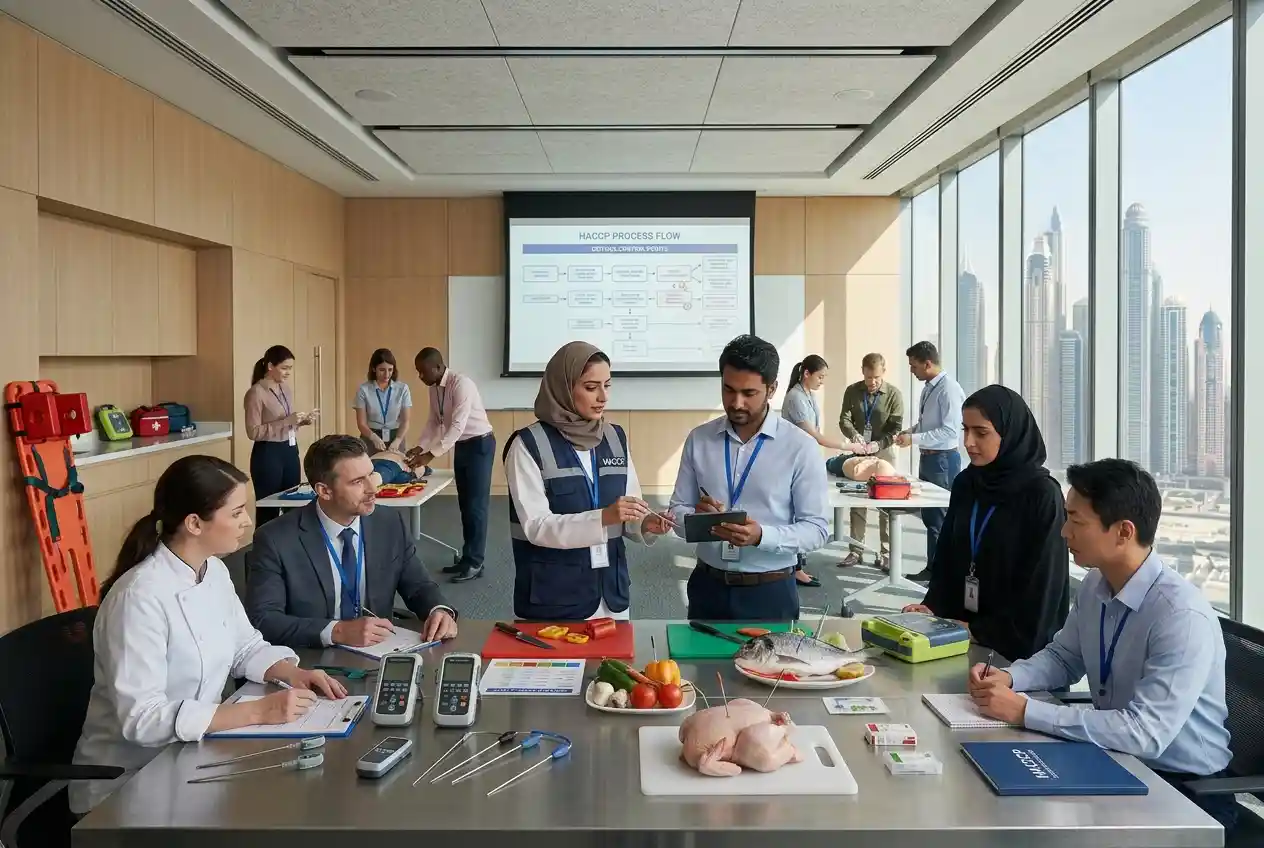

Food safety is a critical priority for businesses operating in restaurants, hotels, catering companies, food manufacturing facilities, supermarkets, cloud kitchens, and other food-related sectors across the UAE. As consumer expectations and regulatory standards continue to evolve, organizations increasingly invest in HACCP training in Dubai to strengthen food safety practices and support operational excellence.
Whether you are a food handler, quality assurance professional, restaurant manager, production supervisor, or business owner, understanding HACCP principles can help improve food safety management and reduce operational risks. Many professionals also combine HACCP education with broader workplace programs such as fire safety training and EFST training to develop a more comprehensive understanding of workplace safety.
What Is HACCP?
HACCP stands for Hazard Analysis and Critical Control Points. It is a globally recognized food safety management approach designed to identify, evaluate, and control potential hazards throughout food production, preparation, storage, and distribution processes.
Rather than relying solely on end-product inspections, HACCP focuses on preventing food safety issues before they occur. This proactive approach helps organizations maintain higher safety standards and improve operational consistency.
Why HACCP Training Is Important in Dubai
Dubai’s food industry serves millions of residents, tourists, and business travelers every year. With a highly competitive hospitality and food service sector, maintaining food safety standards is essential for protecting public health and preserving consumer confidence.
HACCP training helps professionals understand:
- Food safety risks and hazards
- Preventive control measures
- Safe food handling practices
- Risk assessment principles
- Monitoring and documentation processes
- Continuous food safety improvement strategies
These principles support safer operations across food production and service environments.
Who Should Take HACCP Training in Dubai?
HACCP training is relevant to a wide range of professionals involved in food-related operations.
Restaurant Managers
Managers responsible for overseeing food preparation and service operations benefit from understanding food safety management systems and compliance expectations.
Food Handlers
Employees involved in food preparation, storage, transportation, and service can strengthen their understanding of safe handling procedures.
Quality Assurance Personnel
Quality and compliance teams often use HACCP principles to support monitoring programs and food safety audits.
Hotel and Hospitality Professionals
Hotels and resorts frequently operate multiple food service outlets, making food safety knowledge an important part of daily operations.
Food Manufacturing Teams
Production supervisors, plant managers, and food processing staff often rely on HACCP systems to maintain product quality and safety standards.
Key Topics Covered in HACCP Training
Training programs may vary depending on the provider and participant level, but most courses introduce core HACCP concepts and practical applications.
Hazard Analysis
Participants learn how to identify biological, chemical, and physical hazards that could affect food safety.
Critical Control Points
Training explains how organizations determine points within processes where controls can be applied to reduce or eliminate risks.
Monitoring Procedures
Participants gain insight into monitoring activities that support food safety objectives and operational consistency.
Corrective Actions
Understanding how to respond when food safety standards are not met is an important aspect of effective risk management.
Documentation and Record Keeping
Maintaining accurate records helps organizations demonstrate compliance and support continuous improvement initiatives.
Benefits of HACCP Training for Businesses
Organizations that invest in food safety education often gain advantages beyond compliance. HACCP principles can contribute to improved operational efficiency, stronger customer confidence, and better risk management practices.
Key organizational benefits may include:
- Enhanced food safety culture
- Improved risk awareness
- Greater operational consistency
- Stronger quality management processes
- Better customer trust and confidence
- Support for regulatory compliance efforts
For businesses operating in competitive hospitality and food service sectors, these advantages can support long-term success.
Career Advantages of HACCP Certification
Food safety qualifications are increasingly valued by employers across the UAE. HACCP training demonstrates a commitment to quality, compliance, and professional development.
Professionals with food safety knowledge may find opportunities in hospitality, food manufacturing, catering, retail food operations, logistics, quality assurance, and compliance management.
Many learners also pursue additional certifications through KHDA approved training institutes in Dubai to strengthen their career prospects and industry expertise.
HACCP Training and Workplace Safety
While HACCP focuses specifically on food safety, it forms part of a broader workplace safety strategy. Organizations often integrate food safety education with emergency preparedness and employee well-being initiatives.
For example, hospitality businesses frequently encourage staff to complete first aid training in Dubai and fire safety training alongside HACCP programs. This approach helps create safer workplaces while supporting operational resilience.
Comprehensive training frameworks can strengthen both employee confidence and organizational preparedness.
Choosing a HACCP Training Provider in Dubai
Selecting a reputable provider is an important step toward gaining practical and industry-relevant knowledge. Prospective participants should evaluate course content, instructor expertise, certification recognition, and opportunities for real-world application.
Professionals involved in food safety can also review guidance and resources from the Dubai Municipality, which plays an important role in food safety oversight and public health initiatives within the emirate.
A quality training program should focus on practical implementation rather than simply introducing theoretical concepts.
The Growing Importance of Food Safety Education
Consumer awareness regarding food quality, hygiene, and transparency continues to grow. As a result, organizations are placing greater emphasis on food safety systems and employee training.
HACCP education helps businesses build stronger processes while equipping professionals with valuable industry knowledge. In an environment where food safety standards are increasingly important, training can support both operational performance and career development.
In Summary
HACCP training in Dubai provides valuable knowledge for professionals and organizations involved in food production, preparation, distribution, and service. By focusing on prevention, risk management, and continuous improvement, HACCP principles help create safer food environments and stronger operational practices.
Whether you are seeking career advancement, regulatory knowledge, or improved food safety management skills, HACCP training remains an important investment in professional growth and organizational success.