
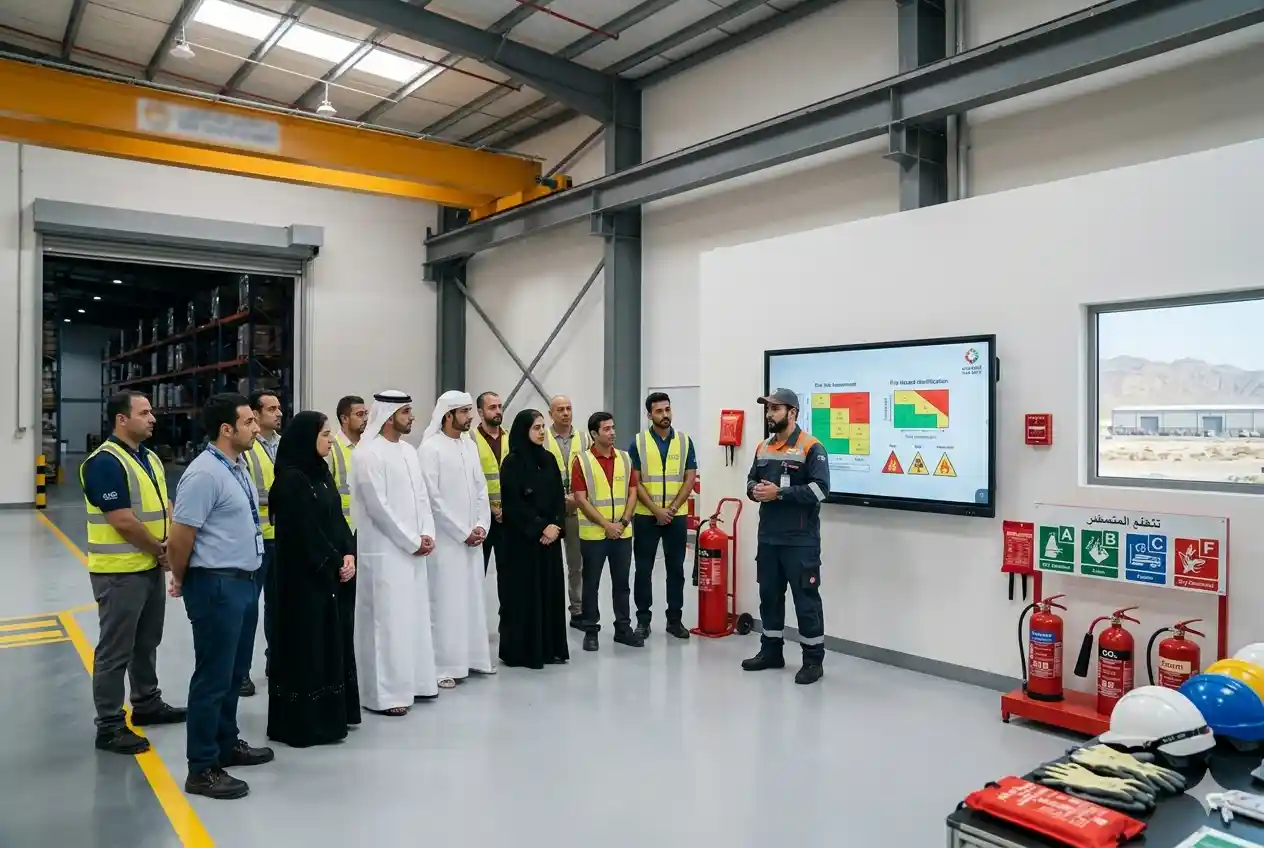

Fire safety remains one of the most important aspects of workplace risk management across the UAE. From commercial offices and industrial facilities to hotels, warehouses, educational institutions, and residential developments, organizations are expected to identify fire hazards and implement appropriate preventive measures. This is where fire risk assessment training plays a critical role.
A structured fire risk assessment process helps businesses identify potential fire hazards, evaluate risks, protect occupants, and comply with safety regulations. For safety officers, facility managers, supervisors, and business owners, professional training provides the knowledge needed to conduct effective assessments and support safer working environments.
As workplace safety standards continue to evolve across the UAE, fire risk assessment training has become a valuable qualification for professionals responsible for occupational health and safety.
What Is Fire Risk Assessment Training?
Fire risk assessment training is designed to teach participants how to identify fire hazards, evaluate potential risks, implement control measures, and develop fire prevention strategies. The objective is to reduce the likelihood of fire incidents while ensuring the safety of employees, visitors, customers, and property.
Training programs typically combine theoretical knowledge with practical workplace applications. Participants learn how to assess fire risks in different environments and develop action plans that support compliance and emergency preparedness.
Why Fire Risk Assessments Are Important
Every workplace presents unique fire hazards. Electrical systems, flammable materials, cooking equipment, machinery, chemical storage areas, and human activities can all contribute to fire risks.
Without a systematic assessment process, organizations may overlook critical hazards that could lead to injuries, operational disruptions, financial losses, or property damage.
Fire risk assessments help organizations:
- Identify potential fire hazards
- Protect employees and visitors
- Reduce workplace accidents
- Improve emergency preparedness
- Support legal and regulatory compliance
- Protect assets and business continuity
For companies operating in high-risk industries, fire safety training often forms part of a broader occupational safety strategy alongside programs such as H2S training and other specialized workplace safety certifications.
Who Should Take Fire Risk Assessment Training?
Fire risk assessment training is suitable for professionals who have responsibility for workplace safety, facility management, emergency planning, or regulatory compliance.
Common participants include:
- Safety officers
- Health and safety managers
- Facility managers
- Maintenance supervisors
- Site managers
- Construction professionals
- Warehouse managers
- Business owners
- Security personnel
Many organizations also encourage department supervisors and team leaders to attend training programs to strengthen overall workplace safety awareness.
Key Topics Covered in Fire Risk Assessment Training
Fire Hazard Identification
Participants learn how to identify common fire hazards within different workplace environments. This includes recognizing ignition sources, combustible materials, unsafe practices, and potential risk factors that could contribute to a fire incident.
Risk Evaluation Techniques
Effective assessments require more than simply identifying hazards. Training teaches professionals how to evaluate the likelihood and potential consequences of fire-related incidents.
This process helps organizations prioritize corrective actions based on risk levels.
Fire Prevention Measures
Prevention remains the most effective fire safety strategy. Training programs explore methods for minimizing risks through equipment maintenance, safe work practices, housekeeping standards, employee awareness, and proper storage procedures.
Organizations that maintain high workplace standards often combine fire safety initiatives with employee development programs such as housekeeping training to improve overall site safety and operational efficiency.
Emergency Response Planning
Participants learn how to develop and support emergency evacuation procedures, communication plans, fire drills, and incident response strategies.
A well-prepared workforce can respond more effectively during emergencies, helping reduce injuries and property damage.
Documentation and Reporting
Fire risk assessments require proper documentation. Training typically covers reporting procedures, recordkeeping practices, inspection schedules, and corrective action tracking.
Industries That Benefit from Fire Risk Assessment Training
Virtually every industry can benefit from fire risk assessment training. However, certain sectors face elevated fire risks due to their operational activities.
Examples include:
- Construction
- Manufacturing
- Oil and gas
- Warehousing and logistics
- Hospitality
- Healthcare
- Educational institutions
- Retail facilities
- Commercial office buildings
In logistics and industrial sectors, specialized providers such as Maersk Training DWC LLC have helped raise awareness of workplace safety standards through industry-focused training initiatives.
Benefits of Fire Risk Assessment Training for Businesses
Improved Workplace Safety
Trained personnel can identify hazards before they develop into serious incidents. This proactive approach contributes to safer working conditions and stronger risk management practices.
Enhanced Compliance
Organizations must often meet fire safety requirements established by authorities, insurers, and industry standards. Training helps ensure that personnel understand their responsibilities and follow appropriate procedures.
Reduced Financial Risk
Fire incidents can lead to costly business interruptions, equipment damage, legal liabilities, and insurance claims. Effective risk assessments help reduce these potential losses.
Stronger Safety Culture
When employees see management investing in safety training, it reinforces a culture of responsibility and awareness throughout the organization.
Choosing the Right Fire Risk Assessment Training Provider
Not all training programs offer the same level of quality or industry relevance. When selecting a provider, consider the following factors:
- Trainer qualifications and experience
- Industry-recognized certifications
- Practical training components
- Updated course content
- Flexible learning options
- Positive participant feedback
Professionals seeking broader career development opportunities may also explore programs offered by an Al Ain training center or specialized educational institutions focused on workplace compliance and professional growth.
Career Opportunities After Fire Safety Training
Fire risk assessment knowledge can support advancement across various safety-related roles. Employers often prioritize candidates who demonstrate practical understanding of hazard identification, emergency planning, and regulatory compliance.
Potential career pathways include:
- Fire safety officer
- Health and safety coordinator
- HSE officer
- Facility manager
- Risk assessment specialist
- Compliance officer
- Safety supervisor
As organizations continue to strengthen workplace safety programs, demand for trained safety professionals is expected to remain strong across multiple sectors.
Conclusion
Fire risk assessment training provides essential skills for identifying hazards, reducing workplace risks, and supporting compliance with safety standards. Whether working in construction, hospitality, logistics, education, or industrial operations, professionals responsible for safety can benefit significantly from structured training.
By investing in fire risk assessment education, organizations create safer workplaces, improve emergency preparedness, and strengthen long-term operational resilience.
For additional guidance on fire safety awareness and workplace risk management, professionals can access resources from the Dubai Civil Defence, which provides valuable information on fire prevention and emergency preparedness within the UAE.