
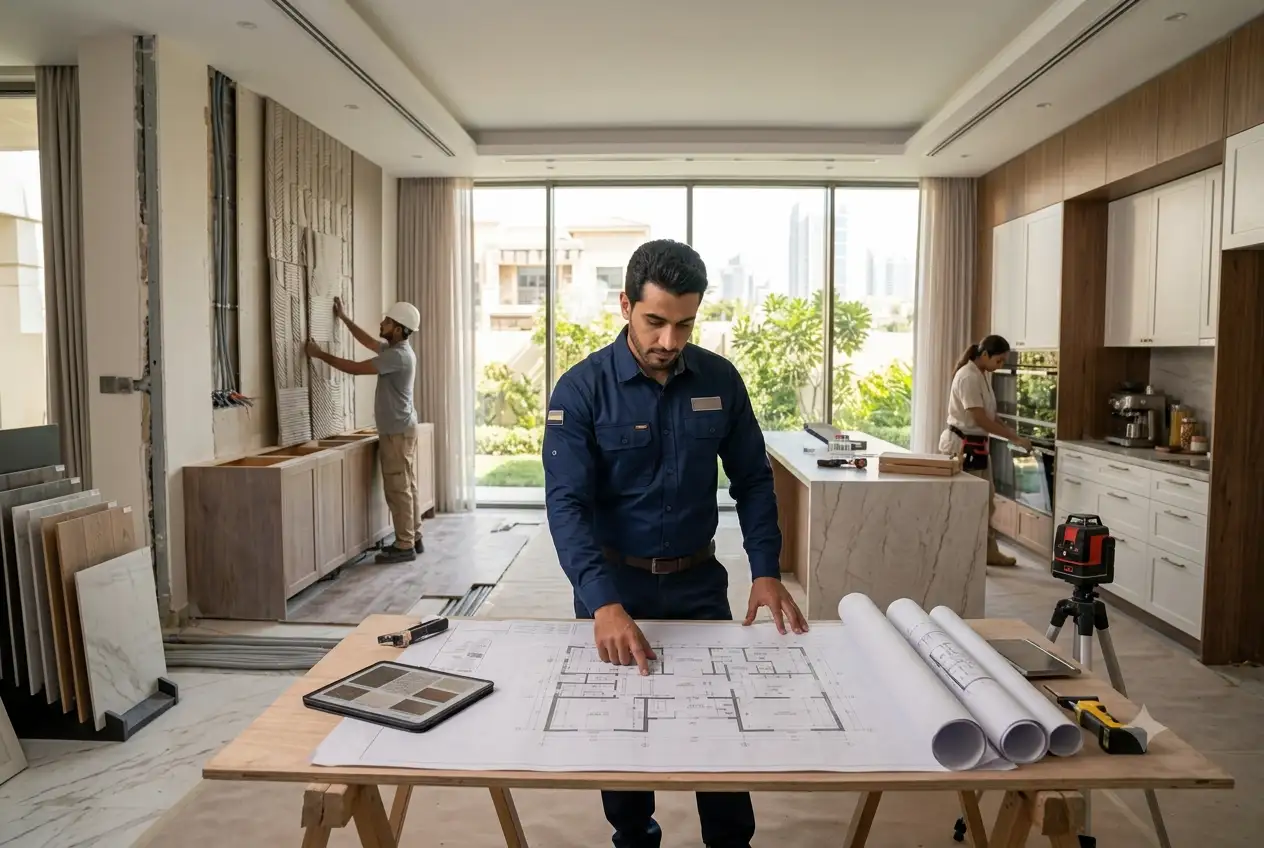

Home renovation projects can significantly improve comfort, functionality, and property value. Whether you’re upgrading an apartment in Dubai, remodeling a villa in Abu Dhabi, or modernizing an older property elsewhere in the UAE, selecting the right contractor for home renovation is one of the most important decisions you’ll make.
A renovation project often involves multiple trades, budgets, timelines, permits, and design considerations. The right contractor can help ensure a smoother experience, while poor contractor selection can lead to delays, unexpected costs, and unsatisfactory results.
This guide explains how to evaluate renovation contractors, compare proposals, and successfully manage a home renovation project in the UAE.
Why Choosing the Right Contractor Matters
Renovations are major investments. Beyond aesthetics, they often impact property functionality, energy efficiency, safety, and long-term market value.
A professional contractor helps coordinate work, manage subcontractors, source materials, and ensure that renovation activities comply with applicable regulations and community requirements.
Proper project management can reduce risks while improving overall renovation quality.
Common Home Renovation Projects in UAE
Homeowners undertake renovations for many reasons, including lifestyle upgrades, property modernization, rental preparation, and resale value improvement.
Popular renovation projects include:
- Kitchen remodeling
- Bathroom upgrades
- Flooring replacement
- Villa extensions
- Interior redesign
- Smart home integration
- Painting and decorative improvements
- Lighting upgrades
- Storage optimization
Many property owners purchasing a Royal Home property or other residential units often customize interiors to better match personal preferences and lifestyle requirements.
Define Your Renovation Goals First
Before contacting contractors, it is important to clearly identify your objectives.
Ask yourself:
- What areas require renovation?
- What is the available budget?
- What completion timeline is preferred?
- Are structural changes required?
- Will the renovation improve resale value?
Clear project goals help contractors prepare more accurate proposals and timelines.
Look for Licensed and Experienced Contractors
Professional credentials should be one of the first factors considered when evaluating contractors.
Experience in similar renovation projects often indicates better project planning, problem-solving capabilities, and quality control processes.
When reviewing contractors, consider:
- Years of experience
- Project portfolio
- Industry certifications
- Licensing status
- Insurance coverage
- Client references
Requesting examples of completed projects can provide valuable insight into workmanship quality.
Compare Multiple Quotations
Obtaining quotations from multiple contractors allows homeowners to compare pricing structures, project scope, timelines, and included services.
However, the lowest price should not automatically determine the final decision.
Review each proposal carefully and examine:
- Material specifications
- Labor costs
- Project milestones
- Completion schedules
- Warranty terms
- Payment structure
A detailed quotation often reflects stronger project planning and transparency.
Review Previous Work and Client Feedback
Past performance can be one of the best indicators of future results.
Look for:
- Before-and-after project examples
- Customer testimonials
- Independent reviews
- Project case studies
- Recommendations from previous clients
Consistent positive feedback often suggests reliable service and customer satisfaction.
Understand Renovation Approvals and Permissions
Depending on the type of project, approvals may be required from local authorities, developers, or community management organizations.
Professional contractors are generally familiar with approval processes and documentation requirements.
Before beginning work, homeowners should confirm:
- Required permits
- Community regulations
- Building management requirements
- Inspection procedures
- Project compliance obligations
Failing to obtain required approvals can result in delays and additional expenses.
Communication Is Essential
Strong communication can significantly improve project outcomes.
Homeowners should establish clear expectations regarding:
- Project updates
- Timeline changes
- Material selections
- Budget adjustments
- Unexpected challenges
Regular communication helps prevent misunderstandings and keeps the project moving efficiently.
Consider Future Technology Requirements
Modern renovations increasingly incorporate smart home technologies, improved connectivity, and digital infrastructure.
Homeowners working remotely or managing connected devices often evaluate internet availability before planning upgrades.
Reliable services such as DU home internet plans can support smart home systems, remote work environments, security solutions, and streaming requirements.
Planning connectivity needs during renovation can reduce future installation costs.
Health and Accessibility Improvements
Many renovation projects now focus on accessibility and long-term usability.
Features such as wider walkways, safer flooring materials, improved lighting, and accessible bathrooms can benefit elderly residents and individuals with mobility challenges.
Families supporting rehabilitation or recovery may also benefit from services such as physiotherapy at home, making accessible design an increasingly important consideration.
Common Renovation Mistakes to Avoid
- Choosing solely based on price
- Skipping written contracts
- Ignoring permit requirements
- Making frequent design changes during construction
- Failing to verify contractor credentials
- Underestimating project budgets
A well-planned renovation process can help minimize these risks.
Questions to Ask Before Hiring a Contractor
- How many similar projects have you completed?
- Can you provide references?
- What is the estimated timeline?
- Who will supervise the project?
- What warranties are offered?
- How are change requests handled?
These questions can help homeowners evaluate professionalism and project readiness.
Where to Verify Business Information
Property owners can review business registration and commercial licensing information through the UAE Government Portal, which provides access to official government resources and business-related information.
Verifying contractor legitimacy is an important step before signing any agreement.
Hiring the right contractor for home renovation can have a significant impact on project quality, budget control, and overall satisfaction. By defining clear goals, comparing multiple quotations, reviewing experience, verifying credentials, and maintaining effective communication, UAE homeowners can improve the likelihood of a successful renovation.
Whether renovating for personal enjoyment, accessibility improvements, rental preparation, or increased property value, careful contractor selection remains one of the most important decisions throughout the renovation process.