
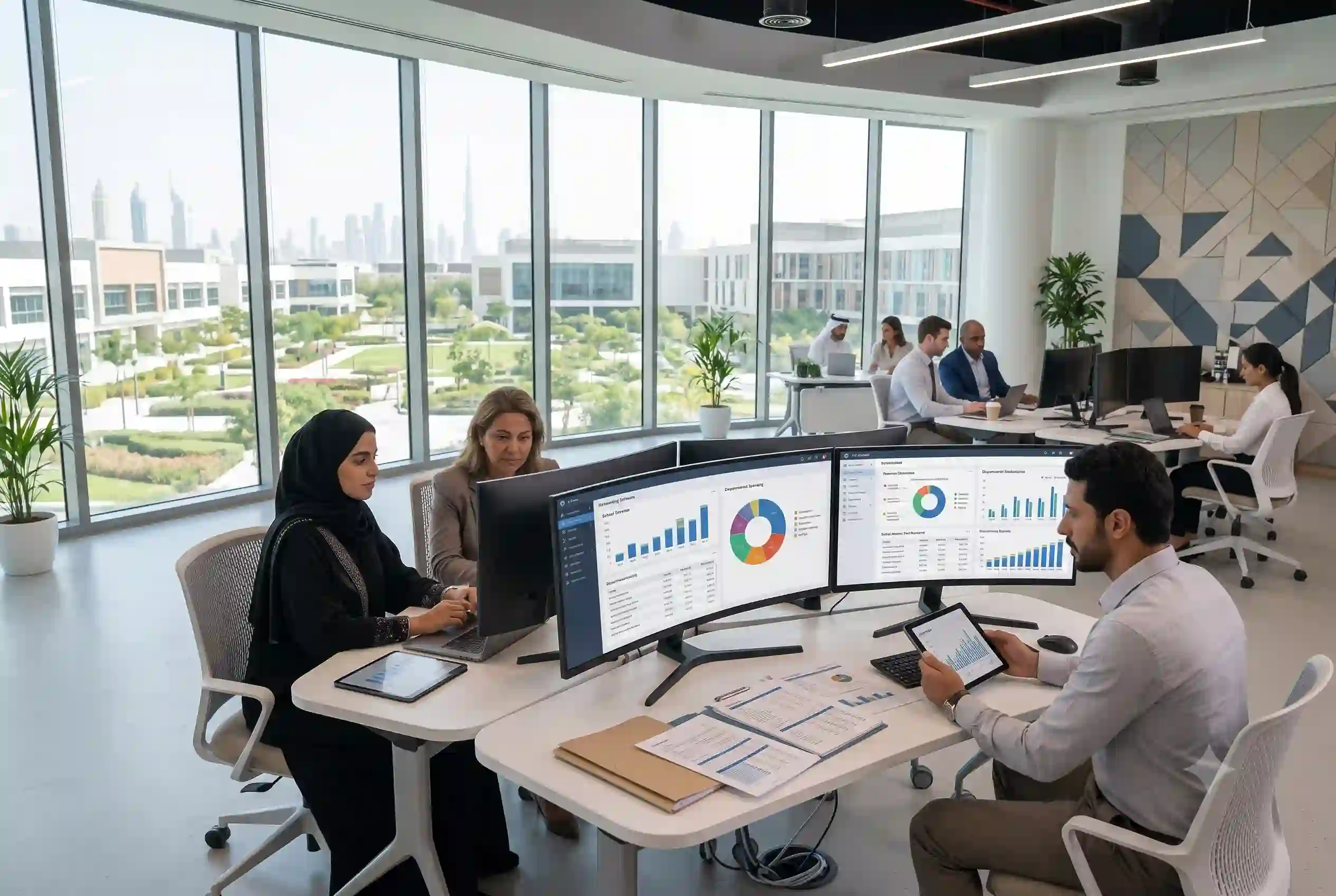

Educational institutions today manage far more than classrooms and academic programs. Schools, colleges, universities, nurseries, academies, and training centers must also handle complex financial operations that include tuition management, payroll, budgeting, procurement, reporting, and regulatory compliance.
As educational organizations continue embracing digital transformation, accounting software for educational institutions has become an essential tool for improving financial accuracy, operational efficiency, and administrative transparency.
Across the UAE, educational providers are increasingly adopting specialized financial management systems that streamline day-to-day operations while supporting long-term planning and sustainable growth.
Why Educational Institutions Need Specialized Accounting Software
Unlike traditional businesses, educational institutions operate within a unique financial environment. They often manage multiple revenue streams, recurring student payments, scholarship programs, grants, staff payroll, transportation services, extracurricular activities, and facility-related expenses.
Manual accounting processes can become time-consuming and prone to errors as institutions grow.
Modern accounting platforms help administrators automate financial workflows, reduce paperwork, improve reporting accuracy, and provide real-time visibility into institutional finances.
These capabilities support broader educational goals outlined in the UAE National Education Charter, which encourages institutions to adopt efficient systems that enhance educational quality and organizational effectiveness.
Key Features of Accounting Software for Educational Institutions
Student Fee Management
One of the most important functions of education-focused accounting software is fee management. Institutions can automate tuition billing, monitor payment schedules, generate invoices, track outstanding balances, and simplify collections.
Automated fee tracking reduces administrative workload while helping maintain accurate financial records.
Budget Planning and Monitoring
Educational organizations must carefully allocate resources across departments, programs, facilities, and staff.
Accounting systems provide budgeting tools that help administrators monitor spending, compare forecasts against actual expenditures, and make informed financial decisions.
Payroll Management
Managing salaries, benefits, allowances, and deductions for teachers, administrative staff, and support personnel can be complex.
Integrated payroll functionality simplifies salary processing while helping institutions maintain compliance with employment requirements.
Financial Reporting
Accurate reporting is critical for transparency and strategic planning. Accounting software generates financial statements, income reports, cash flow summaries, budget analyses, and audit-ready documentation.
These reports help leadership teams evaluate performance and make data-driven decisions.
Procurement and Expense Tracking
Schools and training centers regularly purchase educational materials, technology equipment, facility supplies, and operational resources.
Accounting systems help monitor procurement activities and ensure expenses remain aligned with approved budgets.
Benefits of Implementing Accounting Software
Improved Accuracy
Automation significantly reduces manual data entry errors and improves the reliability of financial records.
Time Savings
Administrative teams can automate repetitive tasks, allowing staff to focus on strategic initiatives and student services.
Better Decision-Making
Access to real-time financial data enables leaders to make informed decisions regarding budgets, investments, staffing, and institutional growth.
Enhanced Transparency
Comprehensive reporting tools improve accountability and provide stakeholders with clear visibility into financial performance.
Scalability
As educational institutions expand, software solutions can adapt to increased student enrollment, additional campuses, and growing operational requirements.
Supporting Training Institutes and Professional Learning Centers
Accounting software is not only beneficial for schools and universities. Professional learning organizations also rely on effective financial management systems.
Institutions such as Strong Point Educational and Training Institute and similar training providers often manage course fees, certification programs, instructor payments, and operational expenses that require structured financial oversight.
Specialized accounting tools help streamline these processes while supporting sustainable business operations.
Integration With Educational Technology Systems
Modern accounting software often integrates with other educational management platforms.
Common integrations include:
- Student information systems
- Learning management systems
- Attendance tracking platforms
- Human resource management systems
- Online payment gateways
- Parent communication portals
Integrated environments improve efficiency by reducing duplicate data entry and creating a centralized administrative ecosystem.
Cybersecurity Considerations for Educational Institutions
Financial systems contain sensitive information that requires strong protection. Educational organizations must prioritize cybersecurity when selecting accounting software.
Recent industry discussions surrounding the GEMS Education cyber attack have reinforced the importance of data security, access controls, system monitoring, and disaster recovery planning within educational environments.
Institutions should evaluate software providers based on their security standards, encryption practices, backup procedures, and compliance capabilities.
Accounting Software for Early Childhood Education Providers
Nurseries and early learning centers also benefit from specialized financial management solutions.
Organizations involved in child development programs, including those associated with initiatives such as Nursary Allayah Sharjah Education Council, often manage enrollment fees, staffing expenses, facility costs, and educational resources.
Accounting systems help administrators maintain financial stability while focusing on delivering quality educational experiences.
Supporting Distance Learning Operations
The expansion of digital learning has introduced new financial considerations for educational organizations.
Institutions offering distance education in Dubai may need to manage online course subscriptions, virtual platform licensing, remote student services, and digital content investments.
Accounting software helps track these expenses while supporting effective financial planning for online education programs.
Choosing the Right Accounting Software
Selecting the right solution requires careful evaluation of institutional needs.
Ease of Use
User-friendly systems reduce training requirements and improve staff adoption.
Customization
Educational organizations should seek software that accommodates their specific workflows and reporting requirements.
Cloud Accessibility
Cloud-based platforms provide flexibility, remote access, and simplified maintenance.
Security Features
Strong authentication, data encryption, and backup capabilities should be considered essential.
Scalable Architecture
Institutions should choose solutions that can grow alongside enrollment and operational expansion.
The Future of Financial Management in Education
As educational institutions continue embracing digital transformation, financial management systems will play an increasingly strategic role.
Automation, artificial intelligence, predictive analytics, and cloud technologies are expected to further enhance the efficiency of educational administration.
Institutions committed to excellence, innovation, and sustainable growth must ensure that their financial infrastructure evolves alongside their academic programs.
Accounting software for educational institutions provides the foundation for transparent financial management, operational efficiency, and informed decision-making. By implementing modern financial systems, schools, colleges, training centers, and educational organizations across the UAE can better support students, educators, and long-term institutional success.
For educational leaders seeking to improve governance, accountability, and resource management, investing in the right accounting platform is becoming an essential part of building a future-ready institution.