
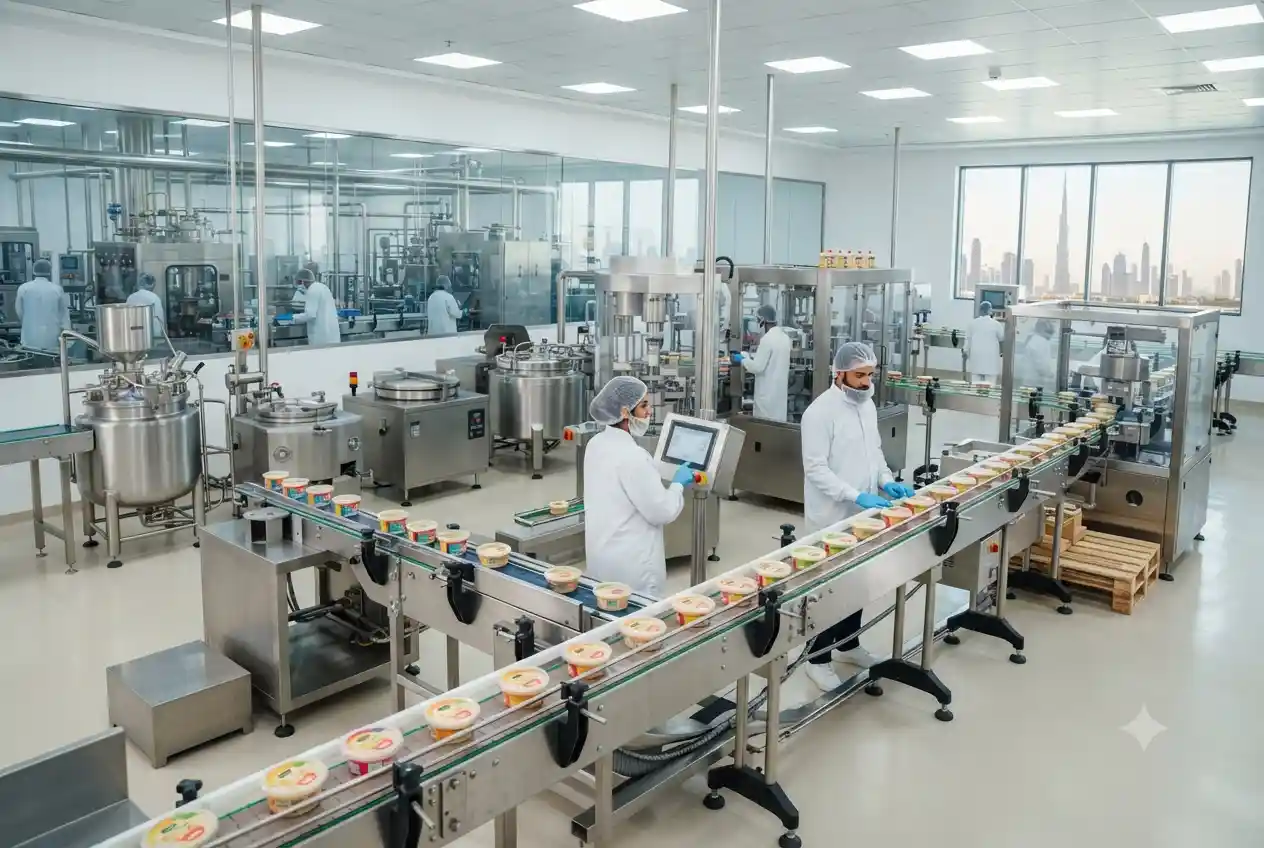

The UAE has become one of the Middle East’s leading food production and processing hubs, supported by advanced infrastructure, strategic trade routes, and a growing consumer market. Food manufacturing companies in UAE produce a diverse range of products, including dairy, beverages, baked goods, frozen foods, snacks, edible oils, confectionery, packaged meals, and health-focused products for both domestic consumption and export.
With increasing demand for high-quality food products, manufacturers continue to invest in innovation, food safety systems, automation, and sustainable production practices. These developments have strengthened the UAE’s position as a reliable supplier to regional and international markets.
The Growing Food Manufacturing Industry in the UAE
The UAE’s food manufacturing sector plays an important role in supporting food security, economic diversification, and employment. Manufacturers serve supermarkets, restaurants, hotels, catering companies, healthcare facilities, schools, and export markets across the Gulf Cooperation Council (GCC), Africa, Asia, and beyond.
Government initiatives encouraging industrial development and investment have also contributed to the sector’s steady expansion.
Products Manufactured in the UAE
Food manufacturing companies produce a wide variety of products to meet the needs of consumers and businesses.
Dairy Products
Milk, cheese, yogurt, butter, and flavored dairy products remain among the country’s largest production categories.
Bakery and Confectionery
Manufacturers supply bread, pastries, biscuits, cakes, chocolates, and confectionery products for retail and hospitality businesses.
Frozen and Ready-to-Eat Foods
Convenience foods continue to grow in popularity as busy households and businesses seek practical meal solutions.
Beverages
The UAE produces bottled water, juices, soft drinks, energy drinks, coffee products, and functional beverages for local and export markets.
Snack Foods
Chips, nuts, popcorn, cereal products, dried fruits, and healthy snack options form an important segment of the manufacturing industry.
Quality Standards and Food Safety
Food manufacturers operating in the UAE are expected to comply with national regulations and internationally recognized food safety practices. Maintaining hygiene, traceability, and quality assurance helps protect consumers while supporting export opportunities.
Many manufacturers implement food safety management systems such as Hazard Analysis and Critical Control Points (HACCP), Good Manufacturing Practices (GMP), and ISO-based quality management standards where applicable.
Employees involved in production, packaging, storage, and distribution often complete food and safety training to ensure safe handling procedures throughout the production process.
Technology in Modern Food Manufacturing
Automation has transformed food manufacturing across the UAE. Modern production facilities increasingly use advanced equipment to improve consistency, productivity, and product quality.
Common technologies include:
- Automated production lines
- Robotic packaging systems
- Digital quality monitoring
- Temperature-controlled storage
- Inventory management software
- Smart traceability systems
These technologies help manufacturers improve efficiency while maintaining high food safety standards.
Supporting the UAE’s Food Security Goals
Local food production contributes to the UAE’s broader food security strategy by reducing dependence on imports and strengthening domestic supply chains. Continued investment in manufacturing facilities, agricultural technology, and logistics supports long-term resilience.
Manufacturers also work closely with distributors, retailers, and food trading companies in Dubai to ensure products reach consumers efficiently across the country and international markets.
Sustainability in Food Manufacturing
Environmental sustainability has become an increasingly important focus for manufacturers operating in the UAE.
Many companies are adopting initiatives such as:
- Reducing food waste
- Improving water efficiency
- Using recyclable packaging materials
- Lowering energy consumption
- Optimizing transportation and logistics
These efforts support both environmental objectives and operational efficiency.
Choosing Quality Food Products
Whether purchasing products for your household or business, consider factors such as:
- Clear ingredient labeling
- Nutritional information
- Production and expiry dates
- Storage instructions
- Recognized quality certifications
- Manufacturer reputation
Consumers with dietary restrictions should also review allergen information carefully. If certain foods consistently cause adverse reactions, medical evaluation through food allergy testing or food intolerance testing may help determine the underlying cause before making significant dietary changes.
Opportunities for Businesses
The UAE continues to attract entrepreneurs and investors interested in food production due to its modern infrastructure, international connectivity, and access to regional markets. Growing demand for organic products, functional foods, plant-based alternatives, and premium packaged goods presents opportunities for manufacturers seeking to expand their product portfolios.
Businesses entering the sector should prioritize regulatory compliance, product quality, efficient supply chain management, and consumer trust.
Conclusion
Food manufacturing companies in UAE play a vital role in supplying safe, high-quality products to consumers while supporting economic growth and regional food security. Through investment in innovation, advanced manufacturing technologies, sustainable practices, and rigorous quality standards, the sector continues to evolve and meet changing consumer expectations. Whether you are a consumer, retailer, or investor, understanding the UAE’s food manufacturing landscape provides valuable insight into one of the country’s fastest-growing industries.
For more information about food regulations, manufacturing standards, and food safety requirements, visit the UAE Ministry of Climate Change and Environment, which provides official guidance for the country’s food sector.