
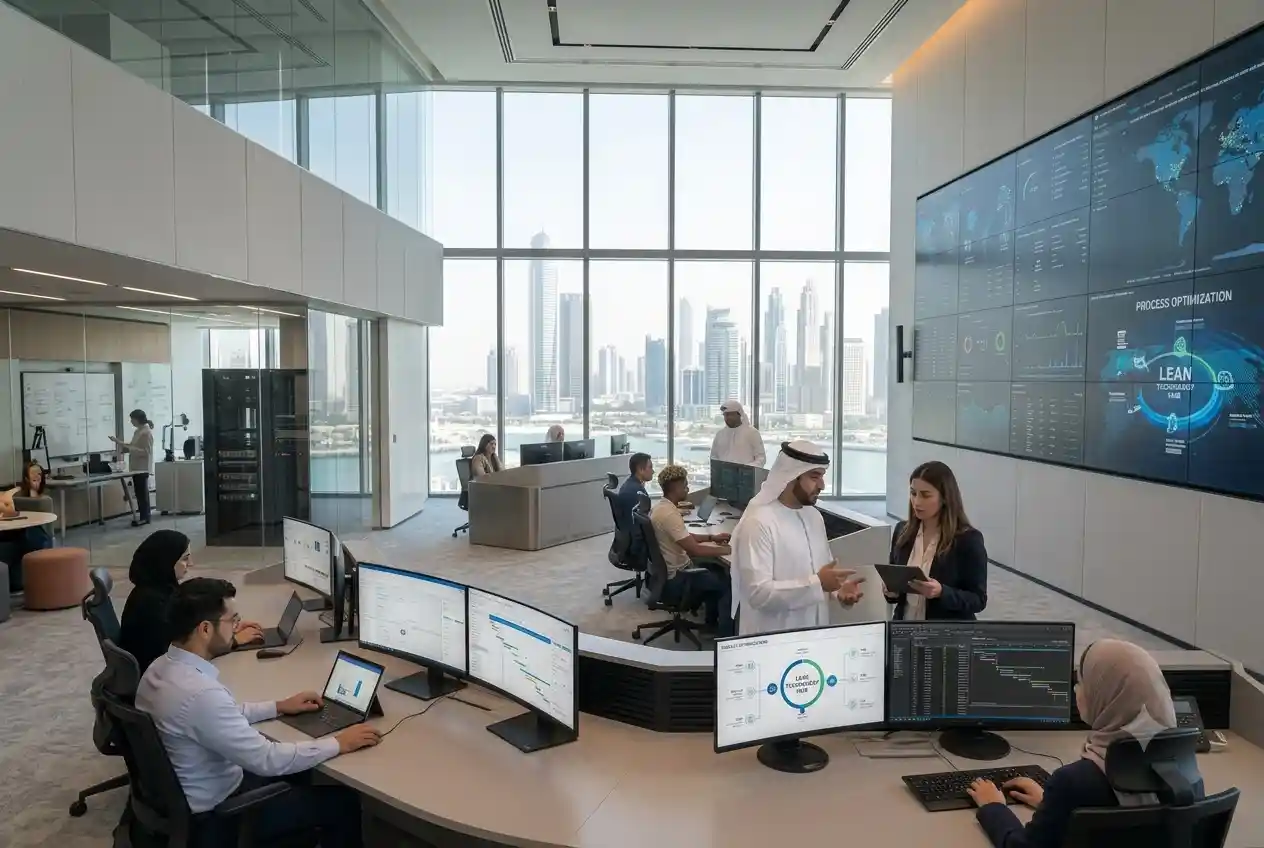

Organizations across the UAE and around the world are constantly looking for ways to improve efficiency, reduce operational waste, and maximize the value of their technology investments. As businesses become increasingly dependent on digital systems, the concept of Lean Technology has gained attention as a practical approach to optimizing processes, improving productivity, and supporting sustainable growth.
Lean principles originally emerged from manufacturing environments, but they have evolved significantly over time. Today, businesses apply lean methodologies to software development, information technology, digital transformation projects, infrastructure management, and organizational operations.
By focusing on efficiency, continuous improvement, and value creation, lean technology strategies help organizations achieve better outcomes while minimizing unnecessary complexity.
What Is Lean Technology?
Lean Technology refers to the application of lean principles within technology-related processes, systems, and business operations. The goal is to maximize value for customers and stakeholders while reducing activities that do not contribute meaningful results.
Rather than simply reducing costs, lean technology focuses on creating efficient workflows, improving collaboration, accelerating innovation, and ensuring resources are used effectively.
Organizations that adopt lean technology practices often seek to:
- Reduce inefficiencies
- Improve service delivery
- Increase productivity
- Enhance customer experiences
- Accelerate project execution
- Optimize technology investments
The Core Principles of Lean Technology
Although implementation approaches may vary between organizations, several foundational principles guide lean technology initiatives.
Focus on Value
Every process, tool, and technology investment should contribute measurable value to customers, employees, or business objectives.
Activities that do not create meaningful outcomes are often evaluated for improvement, simplification, or removal.
Eliminate Waste
Waste can exist in many forms within technology environments, including:
- Redundant processes
- Unnecessary approvals
- Duplicate systems
- Excessive manual tasks
- Unused software resources
- Inefficient workflows
Reducing waste allows organizations to operate more efficiently while lowering operational overhead.
Continuous Improvement
Lean technology encourages organizations to consistently evaluate performance and identify opportunities for optimization.
Small, ongoing improvements often produce significant long-term benefits.
Empower Teams
Successful lean initiatives rely on collaboration and employee engagement. Teams closest to operational challenges are often best positioned to identify improvement opportunities.
Why Lean Technology Matters in the UAE
The UAE continues investing heavily in innovation, smart infrastructure, digital government services, and technology-driven economic development.
As organizations modernize operations, efficiency becomes increasingly important. Businesses seek solutions that help them improve performance without introducing unnecessary complexity.
Technology service providers and consulting firms frequently incorporate lean principles into digital transformation initiatives to improve project outcomes and maximize return on investment.
Readers interested in understanding the broader role of technology within the country’s business environment may also find value in Key Information Technology UAE.
Lean Technology in IT Operations
IT departments often manage large numbers of systems, applications, users, and infrastructure components. Without efficient processes, operational complexity can increase rapidly.
Lean technology helps IT teams streamline activities such as:
- Incident management
- System maintenance
- Infrastructure monitoring
- Technical support workflows
- Change management
- Resource allocation
These improvements can lead to faster response times, better service quality, and more efficient use of resources.
Lean Technology and Digital Transformation
Digital transformation initiatives often involve substantial investments in technology platforms, cloud infrastructure, automation tools, and business process improvements.
Without careful planning, organizations may introduce unnecessary complexity that reduces efficiency rather than improving it.
Lean technology methodologies help organizations focus on outcomes that deliver genuine business value.
Technology providers such as those discussed in Global Technology Services LLC frequently support businesses through modernization efforts that prioritize efficiency, scalability, and long-term sustainability.
Automation as a Lean Technology Strategy
Automation is one of the most effective ways organizations implement lean principles.
By automating repetitive tasks, businesses can reduce manual effort, improve consistency, and free employees to focus on higher-value activities.
Common examples include:
- Workflow automation
- Customer service automation
- Document processing systems
- Automated reporting
- IT service management automation
- Business process automation
When implemented thoughtfully, automation can significantly improve productivity while supporting operational excellence.
The Relationship Between Lean Technology and Cloud Computing
Cloud platforms have become important enablers of lean technology strategies.
Cloud environments offer flexibility, scalability, and resource optimization that align closely with lean principles.
Organizations can:
- Scale resources as needed
- Reduce infrastructure waste
- Improve collaboration
- Enhance system availability
- Accelerate innovation cycles
This allows businesses to respond more effectively to changing operational requirements.
Lean Technology in Software Development
Software development teams increasingly adopt lean methodologies to improve project delivery and product quality.
Lean development practices focus on:
- Rapid feedback cycles
- Continuous improvement
- Customer-centric design
- Efficient resource utilization
- Incremental delivery
- Quality assurance integration
These approaches help teams deliver solutions more efficiently while reducing unnecessary development effort.
Measuring Lean Technology Success
Organizations typically evaluate lean technology initiatives using measurable performance indicators.
Common metrics may include:
- Operational efficiency improvements
- Reduced process cycle times
- Lower operational costs
- Improved customer satisfaction
- Reduced system downtime
- Faster project delivery
Tracking these indicators helps organizations understand whether improvement efforts are generating meaningful results.
Technology Skills and Workforce Readiness
The success of lean technology initiatives often depends on the skills and capabilities of employees.
Educational institutions increasingly emphasize technology literacy, problem-solving abilities, and innovation-focused learning to prepare graduates for modern workplaces.
Students exploring technology-oriented education pathways may also find useful information in Liwa College of Technology and Emirates College of Technology.
Best Practices for Implementing Lean Technology
Organizations pursuing lean technology initiatives often benefit from following structured implementation strategies.
- Clearly define business objectives
- Identify inefficient processes
- Engage stakeholders early
- Prioritize customer value
- Measure performance continuously
- Encourage continuous improvement
- Invest in employee development
These practices help create a culture of efficiency and innovation that supports long-term success.
Learning More About Lean Principles
Organizations interested in understanding lean methodologies can explore resources from the Lean Enterprise Institute, which provides educational materials related to lean thinking and continuous improvement practices.
Moving Forward
Lean Technology represents a practical approach to improving efficiency, reducing waste, and maximizing the value of technology investments. As organizations across the UAE continue embracing digital transformation, lean principles provide a framework for achieving sustainable growth while maintaining operational excellence.
By focusing on value creation, continuous improvement, automation, and efficient resource utilization, businesses can build stronger, more agile operations capable of adapting to future challenges and opportunities.