
The camel market remains one of the most fascinating and culturally significant aspects of traditional commerce in the UAE. While modern economic sectors have transformed the country’s commercial landscape, camels continue to hold an important place in Emirati heritage, agriculture, tourism, and livestock trading.
For generations, camel markets have served as gathering points where breeders, farmers, traders, and buyers meet to conduct business. Today, these markets continue to operate while adapting to modern standards, regulations, and commercial practices.
Whether viewed from a cultural, agricultural, or economic perspective, camel markets offer valuable insight into a tradition that remains deeply connected to the identity of the region.
The Historical Importance of Camels in the UAE
Long before modern transportation and infrastructure, camels played a vital role in daily life throughout the Arabian Peninsula. They were essential for travel, trade, transportation, food production, and survival in desert environments.
Their ability to endure harsh climates made them one of the region’s most valuable assets.
As trade routes developed, camels became closely linked to economic activity and regional commerce, leading to the growth of specialized trading centers and markets.
What Is a Camel Market?
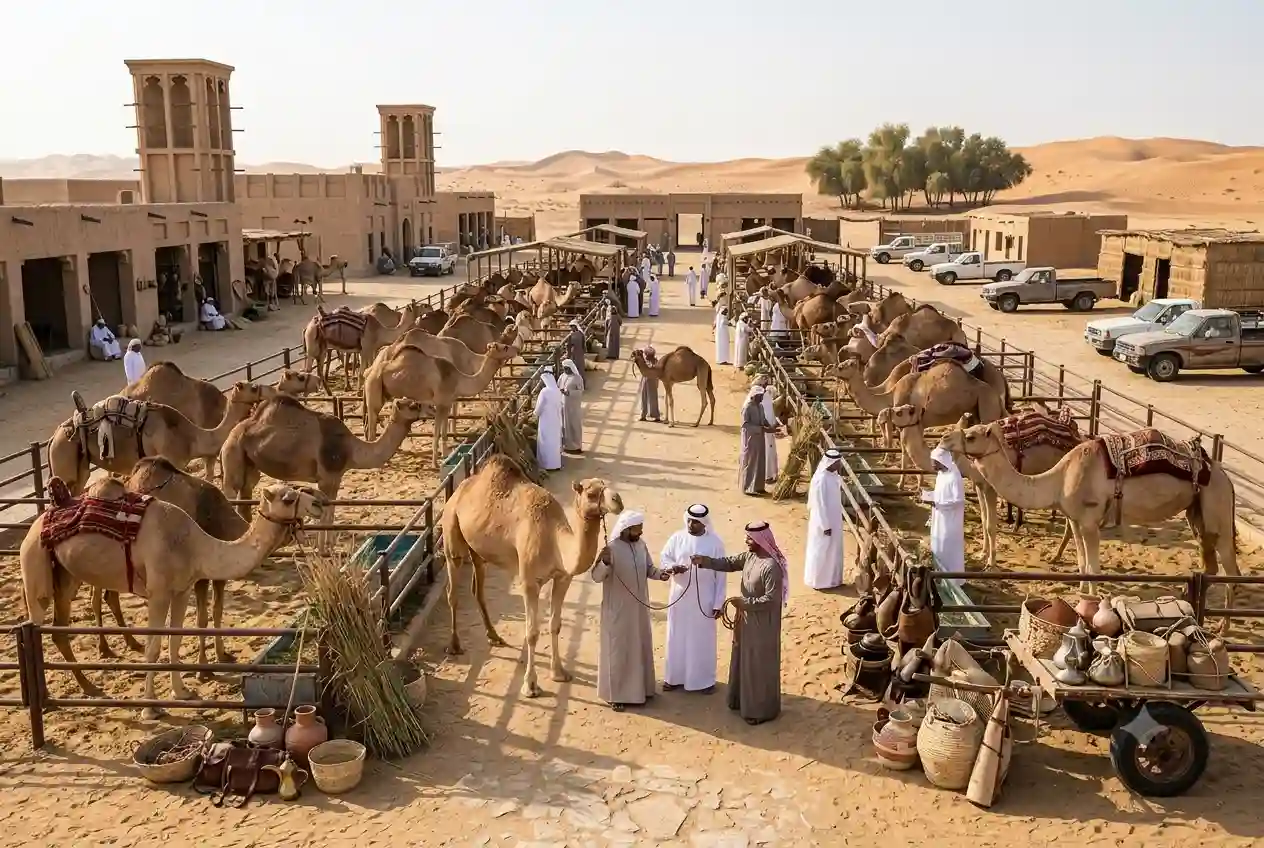
A camel market is a specialized livestock marketplace where camels are bought, sold, evaluated, and traded. These markets typically bring together breeders, livestock owners, agricultural professionals, and commercial buyers.
Transactions may involve camels intended for breeding, agriculture, racing, tourism, or other approved purposes.
Many camel markets operate within the broader framework of the UAE’s animal market sector while maintaining their own unique traditions and trading practices.
Why Camel Markets Remain Relevant Today
Cultural Heritage
Camels are widely recognized as symbols of Emirati culture and history. Their continued presence reflects a commitment to preserving traditional practices while embracing modern development.
Camel markets help maintain this connection by supporting breeders and livestock communities.
Breeding and Livestock Management
Professional breeders rely on camel markets to exchange animals, strengthen breeding programs, and improve herd quality.
Breeding remains an important activity within the livestock sector.
Economic Activity
Camel trading contributes to local economies through livestock sales, transportation services, veterinary care, feed supply, and related industries.
The market creates opportunities for various stakeholders throughout the supply chain.
How Camel Trading Works
Animal Evaluation
Buyers typically assess camels based on factors such as age, health, physical condition, breeding history, and intended use.
Experienced traders often rely on extensive knowledge when evaluating livestock.
Market Negotiations
Price negotiations are a common aspect of livestock trading. Market conditions, breed quality, and demand can influence transaction values.
Both buyers and sellers seek fair agreements based on the characteristics of individual animals.
Health and Documentation
Responsible transactions often involve verification of health records and compliance with relevant regulations.
Animal welfare and health management remain important considerations throughout the trading process.
Camels and the UAE Economy
Although the UAE economy has diversified significantly, camels continue to contribute to multiple sectors.
Beyond livestock trading, camels support tourism, cultural events, agricultural activities, and heritage preservation initiatives.
The continued popularity of camel-related experiences demonstrates the animal’s enduring importance within Emirati society.
Camel Markets and Tourism
Many visitors are interested in learning about traditional livestock trading and regional heritage. Camel markets can offer unique cultural experiences that showcase an important part of the UAE’s history.
Tourists often visit these markets to observe trading activities, learn about breeding practices, and gain a deeper understanding of desert culture.
These experiences complement other traditional attractions found throughout the country.
Technology and Modern Camel Trading
Like many industries, livestock trading has adopted digital tools to improve communication and business operations.
Breeders and livestock businesses increasingly use online platforms to share information, showcase animals, and communicate with buyers.
Many organizations utilize strategies similar to email marketing in UAE campaigns to maintain relationships with customers and industry partners.
Larger enterprises may also benefit from professional digital marketing packages Dubai that help expand visibility and generate commercial inquiries.
Animal Welfare and Responsible Trading
Modern livestock markets place increasing emphasis on responsible animal management. Proper nutrition, transportation, veterinary care, and housing contribute to animal welfare and long-term sustainability.
Buyers and sellers alike benefit from maintaining high standards of care.
Responsible practices also help strengthen confidence within the livestock industry.
The Future of Camel Markets
As the UAE continues to balance tradition and innovation, camel markets are expected to remain relevant for cultural, agricultural, and commercial reasons.
Advancements in livestock management, breeding programs, veterinary care, and digital technologies will likely influence how camel trading evolves in the coming years.
However, the cultural significance of camels ensures that these markets will continue to occupy a unique place within Emirati society.
Learning More About Livestock Management
Professionals involved in livestock breeding and animal care can benefit from educational resources and industry guidance.
The Food and Agriculture Organization provides information on livestock development, animal health, sustainability, and agricultural best practices.
The Bottom Line
The camel market represents a unique blend of heritage, commerce, and livestock management within the UAE. While modern industries continue to expand, camel trading remains an important link to the country’s history and cultural identity.
For breeders, agricultural professionals, investors, and visitors, camel markets offer valuable insight into a tradition that continues to evolve while preserving its historical significance. Their role in supporting cultural heritage, livestock development, and economic activity ensures they remain an important part of the UAE’s commercial landscape.