
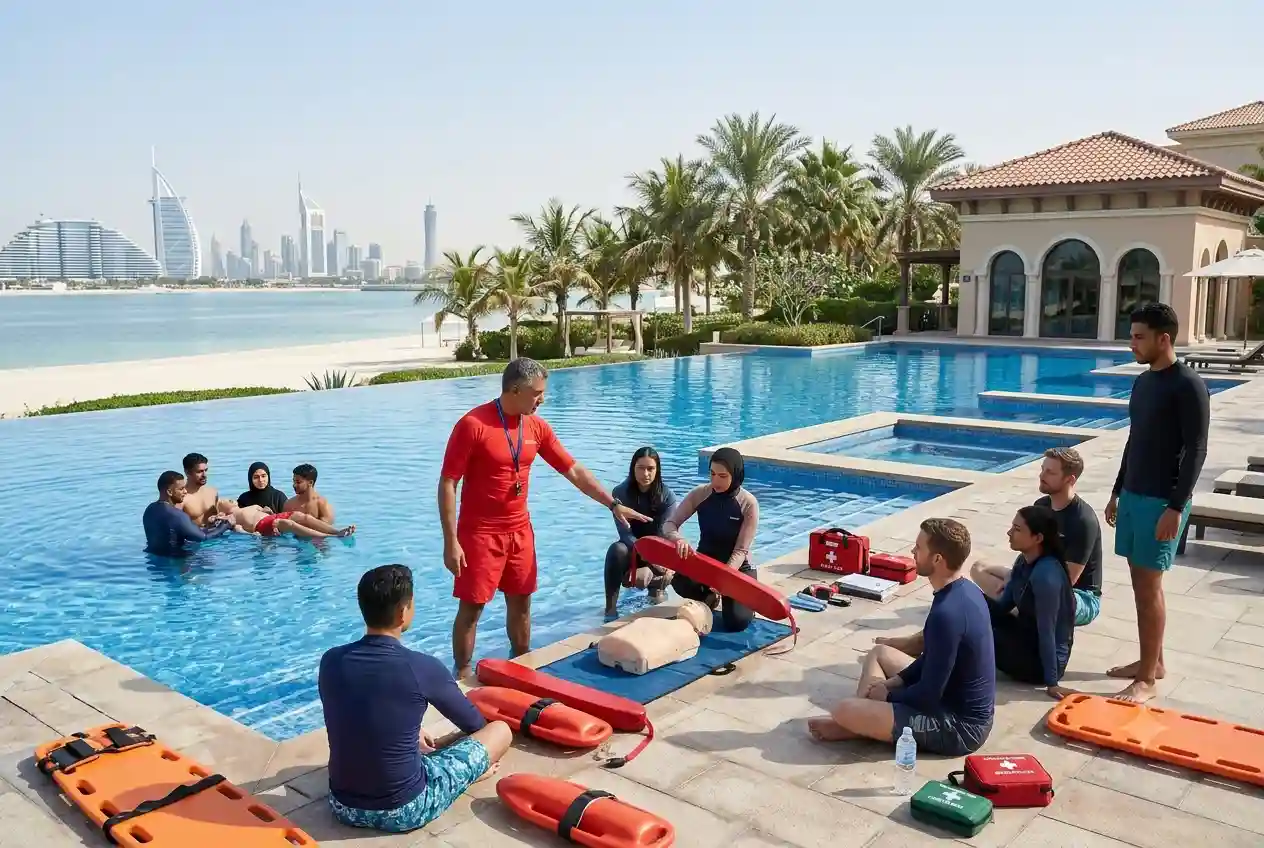

With its extensive coastline, luxury resorts, swimming pools, water parks, private communities, and recreational facilities, the UAE places a strong emphasis on water safety. Lifeguards play a critical role in protecting swimmers, preventing accidents, and responding effectively during emergencies. As a result, lifeguard training has become an important pathway for individuals interested in aquatic safety and emergency response careers.
Whether you are pursuing employment at a hotel, beach facility, sports club, water park, or residential community, professional lifeguard training helps develop the practical skills and confidence needed to perform effectively in aquatic environments. Many candidates also complement their qualifications with first aid training in Dubai and EFST training to strengthen their emergency response capabilities.
What Is Lifeguard Training?
Lifeguard training is a specialized program designed to prepare individuals for the responsibilities associated with monitoring aquatic environments and responding to emergencies. Training combines theoretical knowledge, physical fitness requirements, safety awareness, and practical rescue techniques.
The objective is to equip participants with the skills needed to identify potential risks, prevent accidents, and respond appropriately when emergencies occur.
Why Lifeguard Training Is Important in the UAE
The UAE’s climate and lifestyle encourage year-round participation in water-related activities. Hotels, resorts, beaches, fitness clubs, residential compounds, and entertainment venues often require trained lifeguards to maintain safe environments for guests and residents.
Lifeguard training supports:
- Water safety awareness
- Emergency preparedness
- Accident prevention
- Risk assessment skills
- Rescue response capabilities
- Public safety protection
Properly trained lifeguards help reduce risks while providing reassurance to facility operators and visitors.
Who Should Take Lifeguard Training?
Lifeguard certification programs are suitable for individuals seeking careers in aquatic safety, recreation management, hospitality, and sports facilities.
Hotel and Resort Staff
Luxury resorts and hotels throughout the UAE frequently employ lifeguards to supervise swimming pools, beaches, and recreational water facilities.
Sports and Fitness Professionals
Sports clubs, fitness centers, and aquatic facilities often require trained personnel capable of maintaining safe environments for members and visitors.
Water Park Employees
Large entertainment venues depend on skilled lifeguards to oversee attractions and respond quickly to emergencies.
Community Facility Operators
Residential compounds and private communities frequently employ lifeguards to supervise swimming facilities and support resident safety.
Core Skills Developed During Lifeguard Training
Professional lifeguard courses focus on a combination of physical ability, situational awareness, and emergency response knowledge.
Water Surveillance Techniques
Participants learn how to monitor aquatic environments effectively, identify potential hazards, and recognize signs of distress among swimmers.
Risk Assessment
Understanding how to evaluate environmental conditions and identify safety concerns is a key component of lifeguard responsibilities.
Emergency Response Procedures
Training introduces structured response protocols that help participants react calmly and effectively during critical situations.
Rescue Techniques
Practical exercises often focus on safe rescue methods and strategies for assisting individuals in difficulty.
Communication Skills
Effective communication supports incident management, team coordination, and public safety awareness.
The Role of First Aid in Lifeguarding
Lifeguards frequently serve as first responders during aquatic incidents. For this reason, many training pathways include emergency care and safety awareness components.
Many professionals strengthen their qualifications by completing first aid training in Dubai and fire safety training alongside lifeguard certification programs. These complementary skills can improve preparedness and support broader workplace safety responsibilities.
A well-rounded safety education helps lifeguards respond confidently across a range of emergency scenarios.
Career Opportunities After Lifeguard Training
Qualified lifeguards can pursue opportunities across several sectors within the UAE.
Hospitality Industry
Hotels, resorts, and leisure facilities consistently require trained lifeguards to support guest safety and operational standards.
Recreation and Sports Facilities
Swimming clubs, sports complexes, and fitness centers often seek individuals with recognized aquatic safety qualifications.
Water Parks and Entertainment Venues
Large attractions require teams of trained professionals to supervise rides, pools, and recreational areas.
Residential Communities
Property management companies frequently hire lifeguards to oversee private swimming facilities within residential developments.
Professional Development Beyond Lifeguarding
Many lifeguards continue developing their skills through additional certifications and professional training programs. Workplace safety, customer service, health and safety management, and leadership courses can contribute to long-term career growth.
Individuals interested in expanding their qualifications may explore programs offered through KHDA approved training institutes in Dubai, where a wide range of professional development opportunities are available.
Continuous learning can open pathways to supervisory and management roles within hospitality, recreation, and facility operations.
Choosing a Lifeguard Training Provider
Selecting a reputable training provider is essential for gaining practical skills and industry-relevant knowledge. Prospective participants should evaluate instructor experience, training facilities, course content, practical learning opportunities, and certification standards.
Professionals interested in aquatic safety can also review resources from the Dubai Municipality, which provides information related to public health, safety, and recreational facility standards.
A strong training program should emphasize hands-on learning and realistic scenarios that prepare candidates for real-world responsibilities.
The Growing Demand for Aquatic Safety Professionals
As tourism, hospitality, and recreational developments continue expanding across the UAE, demand for qualified lifeguards remains strong. Organizations increasingly recognize the importance of trained personnel who can contribute to public safety and emergency preparedness.
Lifeguard training not only prepares individuals for immediate employment opportunities but also provides valuable skills that support broader careers in safety management, recreation services, hospitality operations, and community health initiatives.
Closing Remarks
Lifeguard training provides essential knowledge and practical skills for individuals responsible for maintaining safety in aquatic environments. From risk assessment and emergency response to water surveillance and accident prevention, the training supports both professional development and public safety objectives.
Whether you are seeking a career in hospitality, recreation, sports management, or aquatic safety, lifeguard training offers a strong foundation for future opportunities while helping create safer environments throughout the UAE.