
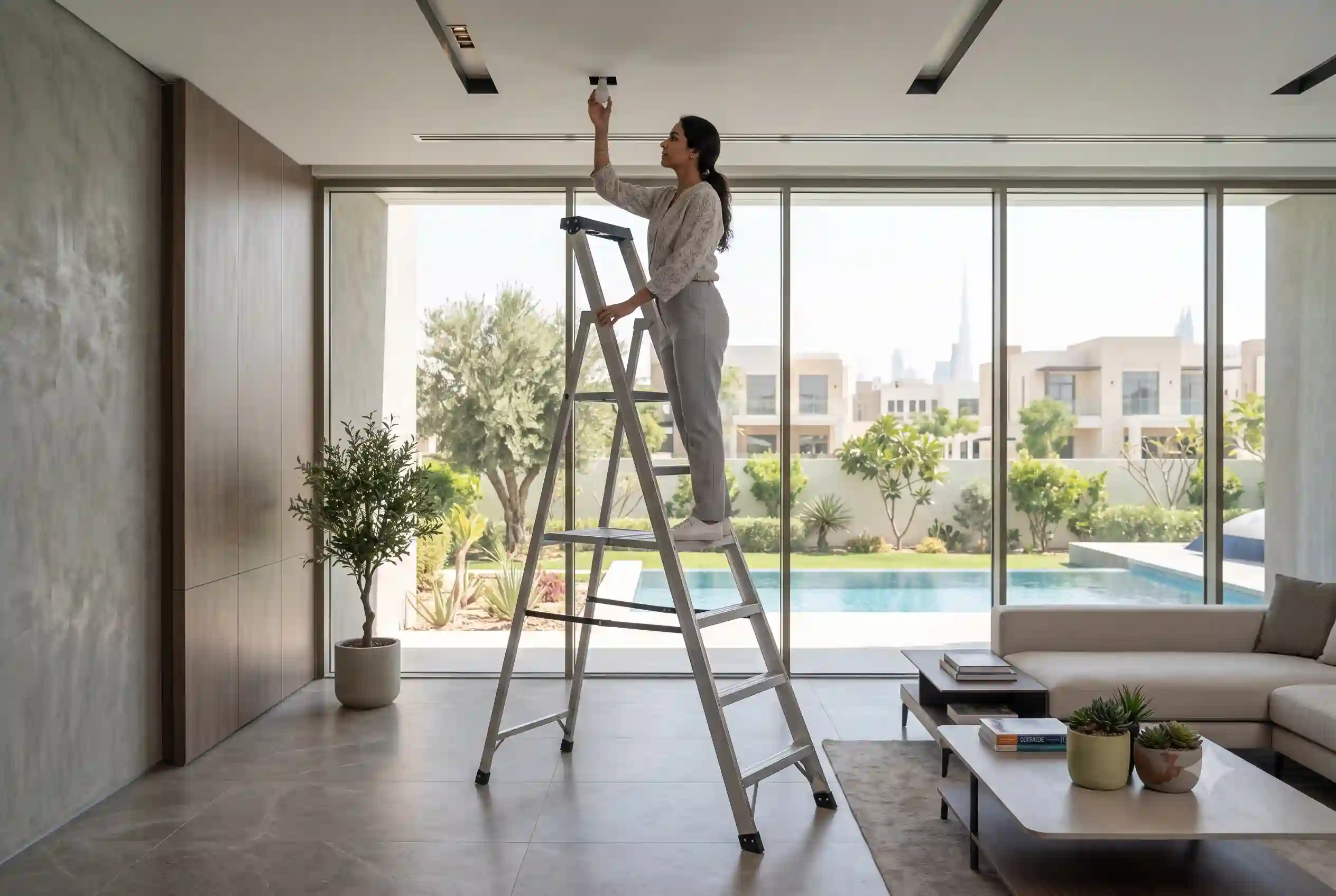

A ladder is one of the most practical tools every household should have. Whether you need to change a light bulb, clean high windows, paint walls, access storage areas, or perform basic maintenance tasks, having the right ladder for home use can make everyday jobs safer and more convenient.
With many designs, materials, and sizes available on the market, choosing the right ladder requires more than simply selecting the tallest option. Safety, stability, weight capacity, storage space, and intended use all play important roles in finding the most suitable solution for your home.
As smart homes become increasingly common across the UAE, homeowners are also installing devices such as CCTV cameras for home with mobile connectivity and solar-powered lighting systems, creating additional situations where a reliable ladder becomes a useful household tool.
Why Every Home Should Have a Ladder
Many household tasks involve reaching areas that are difficult or unsafe to access without proper equipment. Using chairs, tables, or unstable objects as substitutes can increase the risk of accidents and injuries.
A well-designed ladder provides a secure platform that allows homeowners to perform maintenance, cleaning, decorating, and repair work more safely.
Whether living in an apartment, townhouse, or villa, a ladder can save time and eliminate the need to hire professional assistance for simple household tasks.
Common Household Uses for a Ladder
A quality home ladder can be used for a wide variety of everyday tasks.
- Changing ceiling light bulbs
- Installing curtains and blinds
- Cleaning ceiling fans
- Painting walls and ceilings
- Accessing high shelves and storage areas
- Cleaning windows
- Maintaining outdoor lighting
- Installing home security devices
- Reaching rooftop storage spaces
Many homeowners also use ladders when maintaining outdoor features such as solar lights for home, especially in gardens, pathways, and villa entrances.
Types of Ladders for Home Use
Step Ladders
Step ladders are among the most popular options for residential use. They are self-supporting and do not require a wall for stability.
These ladders are ideal for indoor tasks such as changing lights, cleaning shelves, and decorating rooms.
Their foldable design also makes storage relatively easy.
Extension Ladders
Extension ladders are designed for reaching greater heights. They are commonly used for exterior maintenance, roof access, and larger residential properties.
Because they require support from a wall or stable surface, proper positioning is essential for safety.
Extension ladders are typically preferred for outdoor applications.
Multi-Purpose Ladders
Multi-purpose ladders offer flexibility by allowing users to adjust configurations according to different tasks.
These models can function as step ladders, extension ladders, or scaffold-style platforms.
They are particularly useful for homeowners who require versatility without purchasing multiple ladders.
Platform Ladders
Platform ladders include a larger standing surface that provides additional stability and comfort during extended tasks.
They are commonly used for painting, maintenance work, and projects requiring longer periods of standing.
The added platform helps reduce fatigue and improve safety.
Choosing the Right Ladder Material
Aluminum Ladders
Aluminum ladders are lightweight, durable, and resistant to rust. Their portability makes them a popular choice for household use.
However, because aluminum conducts electricity, these ladders should never be used near electrical systems or power lines.
They remain one of the most widely used ladder materials worldwide.
Fiberglass Ladders
Fiberglass ladders are stronger and non-conductive, making them suitable for electrical work.
Although generally heavier than aluminum models, they provide excellent durability and safety.
Many professionals prefer fiberglass ladders for maintenance and installation tasks.
Steel Ladders
Steel ladders offer strength and stability but are typically heavier than other options.
They are often used indoors for light household applications and storage access.
Their durability makes them suitable for long-term residential use.
Important Safety Features to Consider
Safety should always be the highest priority when purchasing a ladder.
Look for features such as:
- Anti-slip feet
- Wide steps
- Locking mechanisms
- Stabilizing bars
- High weight capacity ratings
- Durable frame construction
These features help improve stability and reduce the likelihood of accidents during use.
Purchasing certified products from reputable manufacturers can provide additional peace of mind.
Ladder Safety Tips for Homeowners
Even the highest-quality ladder can become dangerous if used improperly.
- Always place the ladder on a level surface.
- Inspect the ladder before each use.
- Maintain three points of contact while climbing.
- Do not exceed the weight limit.
- Avoid overreaching while standing on the ladder.
- Keep children away during use.
- Store ladders in dry areas to prevent damage.
Following basic safety practices can significantly reduce the risk of injuries and accidents.
How High Should a Home Ladder Be?
The ideal ladder height depends on the intended application.
For apartments and smaller homes, a step ladder with three to five steps is often sufficient. Larger villas and properties with higher ceilings may require taller step ladders or extension ladders.
It is generally recommended to choose a ladder that allows comfortable access without standing on the top step.
Selecting the correct height improves both safety and usability.
The Growing Demand for Home Maintenance Equipment
As more UAE residents invest in home improvements and smart home technology, demand for reliable maintenance tools continues to increase.
From installing energy-efficient lighting to upgrading security systems such as home CCTV cameras with mobile connectivity, homeowners increasingly require practical equipment that supports routine maintenance and upgrades.
Organizations such as the Occupational Safety and Health Administration (OSHA) continue to emphasize safe ladder practices and proper equipment usage for residential and professional environments.
Closing Remarks
Choosing the right ladder for home use involves balancing safety, functionality, durability, and convenience. Whether you need a simple step ladder for indoor tasks or a multi-purpose model for larger projects, selecting the appropriate ladder can make household maintenance safer and more efficient.
By understanding ladder types, materials, and safety requirements, homeowners can invest in equipment that provides long-term value while supporting a wide range of everyday tasks around the home.