
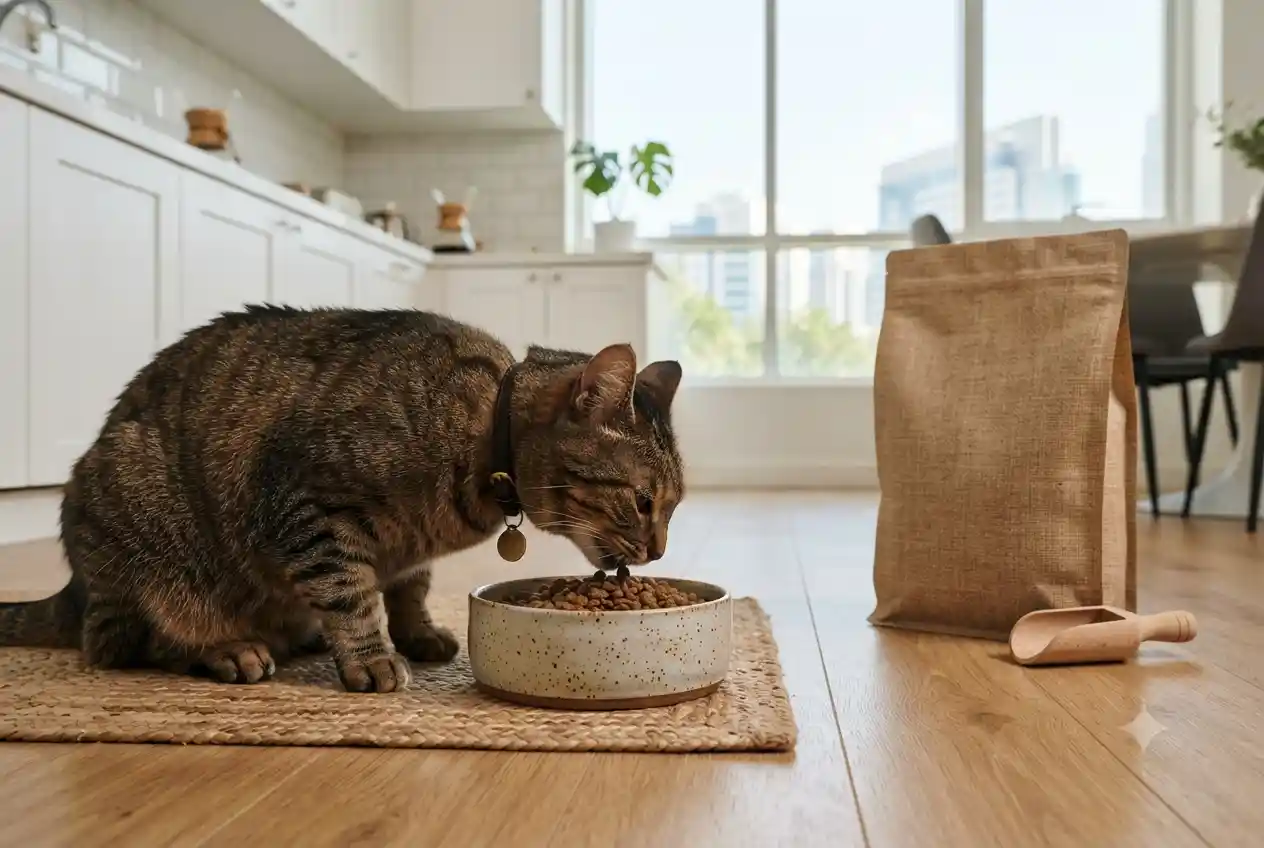

Choosing the right diet is one of the most important responsibilities of every cat owner. Dry cat food remains one of the most popular feeding options because it is convenient, easy to store, and available in formulas designed for kittens, adult cats, and senior cats. When selected appropriately and fed according to recommended portions, it can provide complete and balanced nutrition for healthy cats.
In the UAE, dry cat food is widely available through supermarkets, veterinary clinics, pet stores, and online retailers. With numerous brands and formulas on the market, understanding nutritional labels and your cat’s individual needs can help you make a more informed choice.
What Is Dry Cat Food?
Dry cat food, often referred to as kibble, is a commercially prepared pet food with low moisture content. It is manufactured using carefully balanced ingredients to provide essential nutrients that support a cat’s overall health.
Different products are formulated for specific life stages, activity levels, and nutritional requirements, making it important to choose a diet appropriate for your cat.
Benefits of Dry Cat Food
Convenient Storage
Dry food is easy to store and generally has a longer shelf life than opened wet food when kept in suitable conditions.
Simple Portion Control
Measuring daily feeding amounts is straightforward, helping owners manage their cat’s calorie intake.
Cost-Effective Feeding
Many households find dry food to be an economical option, particularly for multi-cat homes.
Wide Variety of Formulas
Manufacturers offer recipes designed for kittens, indoor cats, active cats, senior cats, and pets with specific dietary needs.
What Nutrients Should Dry Cat Food Provide?
A complete and balanced diet should include essential nutrients that support normal growth, maintenance, and overall wellbeing.
- High-quality protein
- Healthy fats
- Essential vitamins
- Minerals
- Taurine
- Appropriate fiber levels
Always review the product packaging for nutritional information and feeding recommendations.
Dry Cat Food vs Wet Cat Food
Both dry and wet foods can provide balanced nutrition when selected appropriately. The choice depends on factors such as your cat’s preferences, lifestyle, and veterinary recommendations.
- Dry food is easier to store.
- Wet food contains significantly more moisture.
- Both should be introduced gradually when changing diets.
- Many owners successfully combine both feeding methods.
If you’re considering a mixed feeding routine, our guide to wet cat food explains the advantages of canned and pouch-based diets.
Choosing the Right Dry Cat Food
Before purchasing, consider:
- Your cat’s age.
- Current body weight.
- Activity level.
- Medical conditions.
- Veterinary recommendations.
- Ingredient quality.
Changing foods without considering your cat’s nutritional requirements may lead to unnecessary digestive upset.
If you’re comparing established commercial brands, you may also find our guide to Whiskas cat food useful when evaluating available options.
How Much Should You Feed?
Feeding amounts vary depending on:
- Age
- Weight
- Breed
- Activity level
- Health status
Use the feeding guide provided by the manufacturer as a starting point and consult your veterinarian for individualized advice.
Proper Storage Tips
Correct storage helps preserve freshness and nutritional quality.
- Store food in a cool, dry place.
- Seal bags tightly after opening.
- Keep food away from direct sunlight.
- Use clean storage containers if recommended.
- Check expiry dates regularly.
Transitioning Between Foods
When changing to a new dry food, introduce it gradually over approximately one week by mixing increasing amounts of the new food with the current diet. This gradual approach helps many cats adjust comfortably.
When to Consult a Veterinarian
Seek professional advice if your cat develops persistent digestive problems, unexplained weight changes, reduced appetite, excessive thirst, or other ongoing health concerns. Nutritional needs may vary depending on underlying medical conditions.
Responsible Feeding Practices
Regardless of the type of food you choose, always provide fresh drinking water, monitor your cat’s body condition, and schedule regular veterinary checkups. A balanced diet combined with routine healthcare supports long-term wellbeing.
End Note
Dry cat food remains a practical and nutritionally balanced option for many cats in the UAE. By selecting an age-appropriate formula, following recommended feeding portions, storing food correctly, and consulting your veterinarian when needed, you can help support your cat’s overall health throughout every stage of life. Careful product selection and responsible feeding habits contribute to a happy, healthy companion.
For trusted guidance on feline nutrition and selecting appropriate pet foods, visit the WSAVA Global Nutrition Guidelines.