
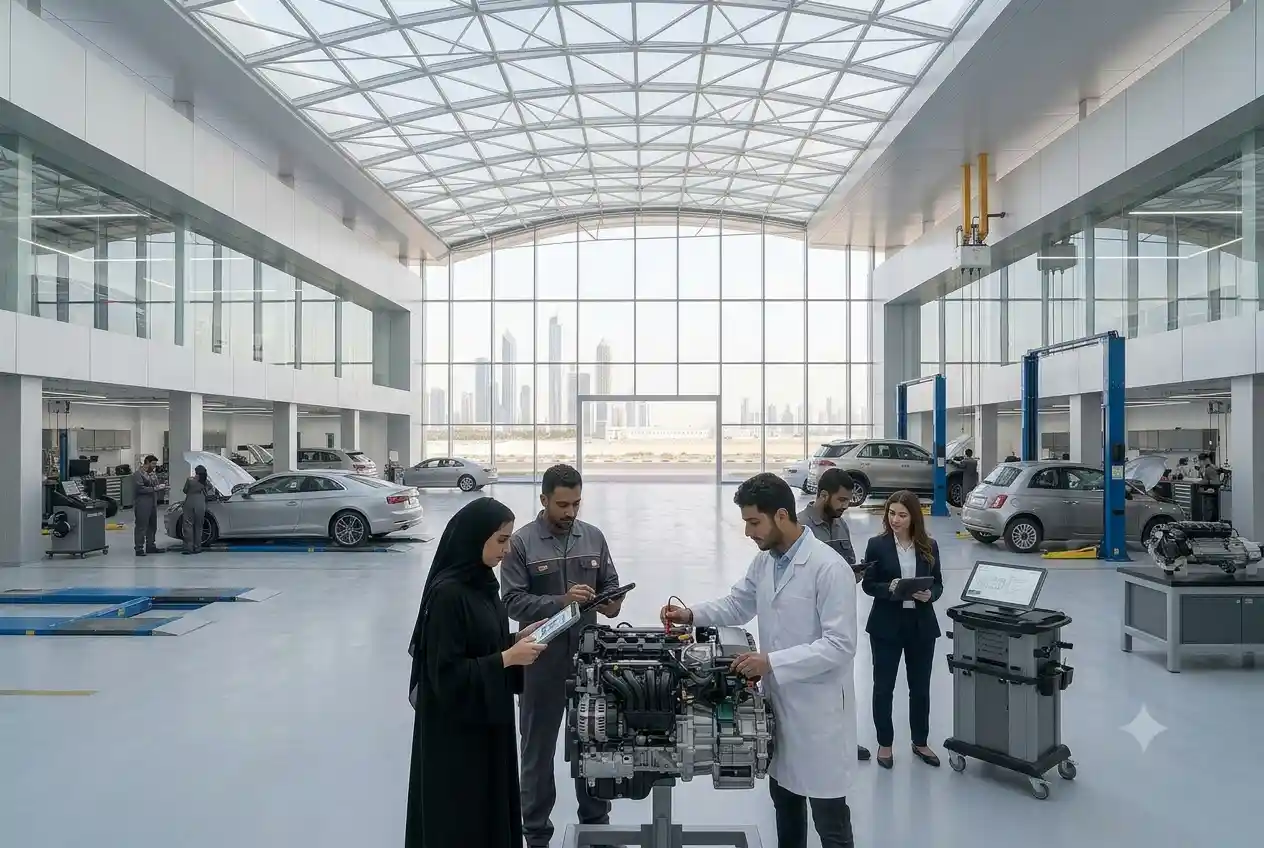

The automotive industry is undergoing rapid transformation driven by technological innovation, digital systems, advanced diagnostics, and evolving vehicle designs. As the UAE continues to expand its transportation and automotive sectors, demand for qualified technical professionals remains strong. One educational pathway that attracts aspiring automotive specialists is a diploma in automobile engineering.
This qualification provides students with foundational knowledge of vehicle systems, maintenance procedures, diagnostics, automotive technologies, and engineering principles. For individuals interested in building a career within the automotive industry, a diploma can serve as an important stepping stone toward technical and professional development.
What Is a Diploma in Automobile Engineering?
A diploma in automobile engineering is a technical education program designed to teach students how vehicles operate, how automotive systems are maintained, and how engineering concepts are applied within the transportation sector.
The curriculum typically combines classroom instruction with practical training, allowing students to develop both theoretical understanding and hands-on experience. Graduates gain knowledge relevant to vehicle maintenance, diagnostics, repair operations, quality control, and automotive technology.
Why Automobile Engineering Remains Relevant
The automotive industry continues to play a critical role in modern economies. Vehicle ownership, transportation services, logistics operations, and infrastructure development all contribute to ongoing demand for automotive expertise.
In the UAE, automotive businesses require qualified personnel capable of working with increasingly sophisticated vehicle systems. Engineers and technicians are needed to support dealerships, workshops, fleet operators, manufacturers, and transportation organizations.
As facilities continue adopting modern technologies such as automobile elevator systems and advanced workshop automation, technical knowledge becomes even more valuable across the industry.
Subjects Commonly Covered in the Diploma
Automotive Engine Systems
Students learn about engine construction, operation, performance principles, and maintenance procedures.
Vehicle Transmission Systems
The course typically covers manual and automatic transmission technologies, power transfer systems, and drivetrain components.
Automotive Electrical Systems
Modern vehicles depend heavily on electrical and electronic systems. Students study wiring, sensors, batteries, and electronic control units.
Vehicle Diagnostics
Diagnostic procedures help identify mechanical and electronic faults using specialized equipment and troubleshooting methods.
Automotive Safety and Quality Standards
Students are introduced to safety regulations, workshop procedures, and quality management principles relevant to automotive operations.
Maintenance and Repair Practices
Practical training often includes servicing procedures, preventive maintenance techniques, and repair methodologies.
Skills Developed Through Automobile Engineering Education
A diploma program helps students develop a wide range of technical and professional competencies, including:
- Mechanical troubleshooting skills
- Vehicle diagnostics expertise
- Technical problem-solving abilities
- Workshop safety awareness
- Engineering fundamentals
- Analytical thinking
- Technical communication skills
- Hands-on maintenance experience
These skills are highly valued by employers throughout the automotive sector.
Career Opportunities After Graduation
Graduates of automobile engineering diploma programs can pursue opportunities across various automotive specializations.
Automotive Technician
Technicians inspect, diagnose, repair, and maintain vehicles using modern tools and equipment.
Service Engineer
Service engineers provide technical support, maintenance planning, and diagnostic expertise.
Workshop Supervisor
Experienced professionals may progress into supervisory roles responsible for managing workshop operations and technical teams.
Fleet Maintenance Specialist
Fleet operators require skilled personnel to oversee vehicle reliability, maintenance schedules, and operational efficiency.
Technical Support Roles
Many organizations hire technically trained professionals to assist with customer support, product information, and service operations.
These career paths often align closely with opportunities available through automobile jobs advertised across the UAE automotive sector.
Why UAE Employers Value Technical Qualifications
The UAE automotive market is highly competitive, and employers increasingly seek candidates with recognized technical education and practical skills.
Formal qualifications demonstrate a candidate’s commitment to learning and provide employers with confidence in their technical capabilities. Educational credentials can also support career advancement into specialized and leadership positions.
Large automotive organizations, including businesses associated with automotive career development programs, often prioritize candidates who possess relevant education and industry knowledge.
The Impact of Technology on Automotive Engineering
Vehicle technologies are evolving rapidly. Modern automobiles incorporate sophisticated software, sensors, connectivity features, safety systems, and digital control units that require specialized knowledge.
Automotive engineers and technicians must continuously update their skills to remain effective within changing technical environments.
Developments in vehicle repair technologies, including advanced automotive refinishing systems, further demonstrate the increasing technical complexity of modern automotive operations.
Future Trends for Automobile Engineering Professionals
The future of automotive engineering is expected to be shaped by automation, connected vehicles, artificial intelligence, predictive maintenance, and advanced mobility technologies. These developments will continue creating opportunities for qualified professionals who understand both traditional vehicle systems and emerging innovations.
Educational institutions and employers are increasingly emphasizing continuous learning to ensure professionals remain prepared for future industry requirements.
Choosing the Right Educational Program
Students considering a diploma in automobile engineering should evaluate factors such as curriculum quality, practical training opportunities, industry relevance, faculty expertise, and career support services.
A strong program should provide a balance between theoretical learning and real-world experience while preparing graduates for the evolving needs of the automotive industry.
For additional information about engineering education standards and professional development, students can explore resources offered by the Institution of Mechanical Engineers (IMechE).
Closing Remarks
A diploma in automobile engineering provides a valuable foundation for individuals seeking careers in the automotive sector. By combining technical knowledge, practical skills, and industry-relevant training, the qualification helps prepare graduates for a wide range of professional opportunities.
As the UAE automotive industry continues expanding and adopting new technologies, qualified automobile engineering professionals will remain essential to supporting innovation, vehicle performance, and transportation infrastructure across the region.