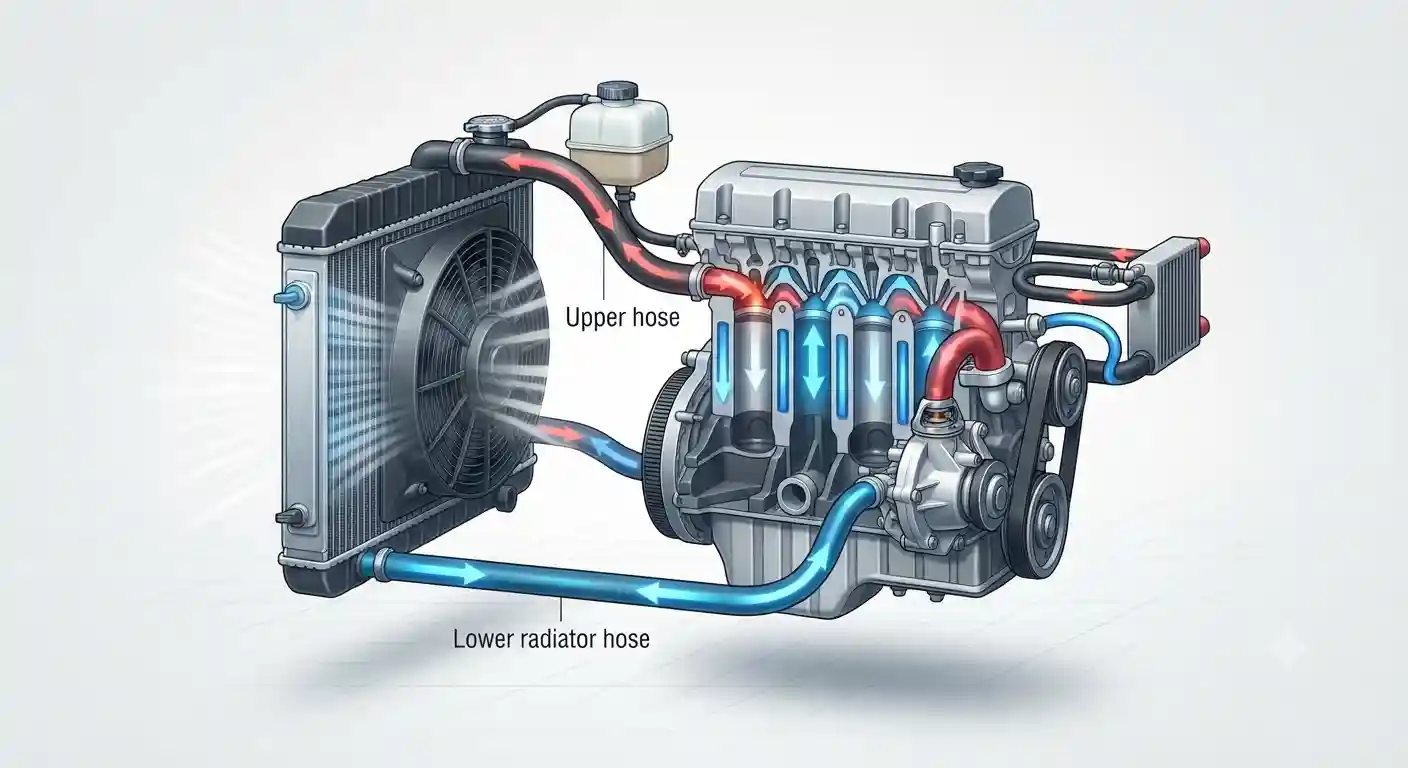

The cooling system in automobile is a critical component that ensures the engine operates within an optimal temperature range. Without an efficient cooling system, engines can overheat, leading to reduced performance, increased wear, and even permanent damage.
In regions like the UAE, where temperatures can soar, a properly functioning cooling system is essential for vehicle reliability and longevity.
Why the Cooling System is Important
During combustion, an engine generates a significant amount of heat. The cooling system helps regulate this heat by dissipating excess thermal energy and maintaining a stable operating temperature.
This is especially important in markets such as the automobile industry in UAE, where extreme weather conditions can put additional stress on vehicles.
Main Components of a Cooling System
1. Radiator
The radiator is responsible for dissipating heat from the coolant into the air.
2. Coolant (Antifreeze)
A special fluid that absorbs heat from the engine and transfers it to the radiator.
3. Water Pump
The water pump circulates coolant throughout the engine and cooling system.
4. Thermostat
This component regulates the flow of coolant based on engine temperature.
5. Cooling Fan
The fan helps cool the radiator, especially when the vehicle is stationary or moving slowly.
6. Hoses and Pipes
These connect various components and allow coolant to flow through the system.
How the Cooling System Works
The cooling system operates in a continuous cycle:
- The water pump circulates coolant through the engine
- The coolant absorbs heat from the engine components
- Hot coolant flows to the radiator
- The radiator cools the fluid using air flow
- Cooled fluid returns to the engine to repeat the cycle
This process ensures that the engine remains within a safe temperature range during operation.
Types of Cooling Systems
1. Air Cooling System
Uses air flow directly over engine components to dissipate heat. Common in motorcycles and small engines.
2. Liquid Cooling System
Uses coolant to transfer heat away from the engine. This is the most common system in modern cars.
Common Cooling System Problems
Over time, cooling systems may develop issues that affect performance:
- Coolant leaks
- Radiator blockages
- Faulty thermostat
- Water pump failure
- Overheating engine
Regular maintenance by professionals working in automobile technician jobs in Dubai can help identify and fix these issues early.
Maintenance Tips for Cooling Systems
To ensure optimal performance, vehicle owners should follow these maintenance practices:
- Check coolant levels regularly
- Inspect hoses and connections for leaks
- Flush and replace coolant as recommended
- Ensure the radiator is clean and unobstructed
- Monitor engine temperature indicators
Role of Technicians in Cooling System Maintenance
Skilled technicians play a vital role in diagnosing and repairing cooling system issues. Many service centers operated by companies like Al Habtoor Automobiles and Masaood Automobiles offer specialized maintenance services.
These professionals ensure that vehicles remain safe and efficient, particularly in demanding environments.
Impact of Climate on Cooling Systems
In hot climates such as Dubai, cooling systems must work harder to maintain engine temperature. This makes regular inspection and maintenance even more important.
Vehicle owners and fleet operators, including those working with trading companies like Al Said Automobile Trading FZCO, must prioritize cooling system efficiency to avoid breakdowns.
Future Innovations in Cooling Technology
Modern vehicles are incorporating advanced cooling technologies, including:
- Electric water pumps
- Smart thermostats
- Improved coolant formulations
- Thermal management systems in electric vehicles
For a deeper understanding of automotive engineering advancements, you can explore automotive engineering resources and research.
Closing Summary
The cooling system in automobile is essential for maintaining engine performance, efficiency, and durability. By understanding its components, working principles, and maintenance requirements, vehicle owners can prevent costly repairs and ensure smooth operation.
As automotive technology continues to evolve, cooling systems will become even more advanced, playing a crucial role in the future of transportation.