
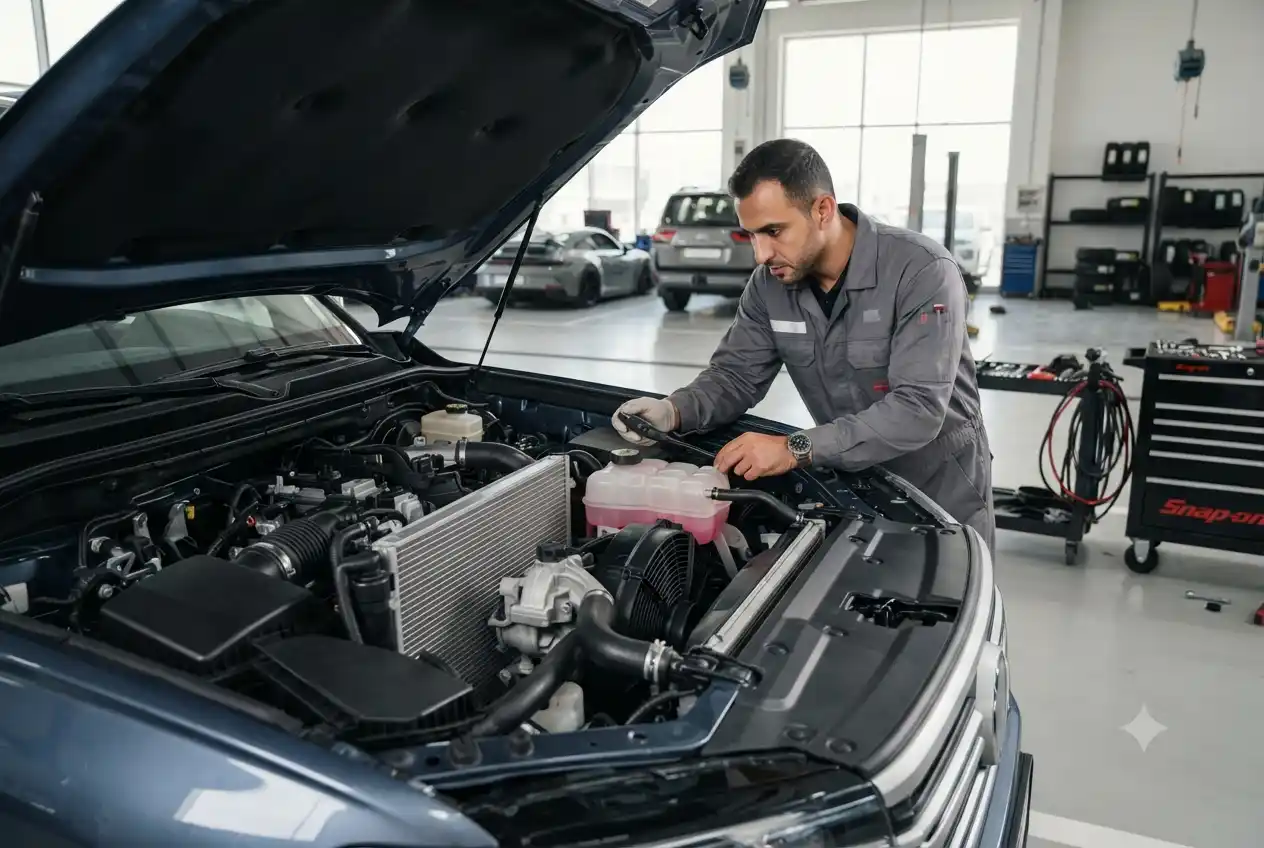

The cooling system in an automobile is one of the most important systems responsible for keeping the engine operating within its ideal temperature range. Every time an engine runs, it generates a significant amount of heat through combustion. Without an efficient cooling system, excessive heat can lead to overheating, reduced performance, costly repairs, and even complete engine failure.
For drivers in the UAE, maintaining a healthy cooling system is even more critical. High ambient temperatures, long highway journeys, heavy traffic, and frequent air conditioning use place additional stress on radiators, coolant, hoses, and cooling fans. Regular inspections and preventive maintenance help reduce the risk of overheating during the hottest months of the year. :contentReference[oaicite:0]{index=0}
What Is a Cooling System in an Automobile?
An automobile cooling system is designed to absorb excess heat produced by the engine and safely release it into the surrounding air. It keeps the engine at its optimal operating temperature, improving efficiency, reducing wear, and protecting critical engine components.
Modern passenger vehicles primarily use liquid cooling systems, although some motorcycles and small engines still rely on air cooling. Advances in automotive engineering have also integrated cooling systems with climate control and electronic thermal management for improved performance. :contentReference[oaicite:1]{index=1}
Main Components of an Automobile Cooling System
Radiator
The radiator dissipates heat from the coolant using airflow as the vehicle moves or with the assistance of electric cooling fans.
Coolant
Coolant (also called antifreeze) circulates throughout the engine, absorbing heat before transferring it to the radiator.
Water Pump
The water pump continuously circulates coolant between the engine and radiator to maintain stable temperatures.
Thermostat
The thermostat regulates coolant flow based on engine temperature, helping the engine warm up quickly while preventing overheating.
Cooling Fan
Electric or engine-driven fans improve airflow through the radiator, especially during slow-moving traffic or when the vehicle is stationary.
Radiator Hoses
Upper and lower radiator hoses transport coolant throughout the cooling circuit.
Expansion Tank
The coolant reservoir accommodates changes in coolant volume as temperatures fluctuate.
How the Cooling System Works
The cooling cycle begins when the engine reaches operating temperature. The water pump circulates coolant through internal engine passages, where it absorbs excess heat generated during combustion.
The heated coolant then flows to the radiator. As air passes through the radiator fins, heat dissipates into the atmosphere. The cooled liquid returns to the engine, where the cycle repeats continuously while the engine is running.
Types of Automobile Cooling Systems
Liquid Cooling System
This is the most common system found in modern passenger cars, SUVs, and commercial vehicles. It provides efficient heat management under varying driving conditions.
Air Cooling System
Air-cooled engines rely on external fins and natural airflow instead of liquid coolant. These systems are generally simpler but are less common in modern automobiles.
Why Cooling Systems Are Especially Important in the UAE
The UAE’s climate creates additional challenges for vehicle cooling systems. Summer temperatures, stop-and-go traffic, and continuous air conditioning use increase engine temperatures and place extra demands on radiators, cooling fans, and coolant. Routine inspections and timely coolant replacement are strongly recommended to reduce the risk of roadside breakdowns and engine damage. :contentReference[oaicite:2]{index=2}
Common Cooling System Problems
- Coolant leaks
- Radiator blockage
- Faulty thermostat
- Water pump failure
- Cooling fan malfunction
- Damaged radiator hoses
- Low coolant level
- Corroded radiator components
Ignoring these issues can cause repeated overheating, which may damage the cylinder head, head gasket, or engine block. :contentReference[oaicite:3]{index=3}
Warning Signs of Cooling System Failure
- Engine temperature gauge rising above normal
- Steam coming from under the hood
- Coolant warning light
- Sweet smell from leaking coolant
- Visible coolant underneath the vehicle
- Engine overheating in traffic
- Poor air conditioning performance during overheating
If any of these symptoms appear, the vehicle should be inspected as soon as possible to avoid more expensive repairs.
Cooling System Maintenance Tips
- Check coolant levels regularly.
- Use the coolant specification recommended by the manufacturer.
- Replace coolant according to the maintenance schedule.
- Inspect radiator hoses for cracks or swelling.
- Keep the radiator clean and free of debris.
- Monitor the temperature gauge during long drives.
- Have the cooling fan and thermostat tested during routine servicing.
Preventive maintenance is generally far less expensive than repairing engine damage caused by overheating.
The Role of Modern Automotive Workshops
Today’s service centers use computerized diagnostic equipment to identify cooling system faults more accurately. Pressure testing, thermal imaging, and electronic diagnostics allow technicians to detect leaks, faulty sensors, weak water pumps, and thermostat problems before they become major issues.
To learn how advanced workshops are transforming vehicle maintenance, read our guide on Advance Automobiles in the UAE.
Cooling Systems and Career Opportunities
Diagnosing and repairing cooling systems is an essential skill for automotive technicians. As vehicles become increasingly sophisticated, employers continue to seek qualified professionals capable of servicing modern engines and electronic cooling systems.
If you’re considering a career in this field, our articles on automobile technician jobs in Dubai and automobile job vacancies in Dubai explain the skills and opportunities available in the UAE.
Final Verdict
The cooling system in an automobile is essential for engine reliability, fuel efficiency, and long-term vehicle performance. By understanding how its components work together and following regular maintenance schedules, drivers can reduce the likelihood of overheating and expensive repairs.
For motorists in the UAE, where extreme temperatures create additional demands on vehicle systems, routine cooling system inspections are one of the most effective ways to maintain safe and dependable transportation throughout the year.