
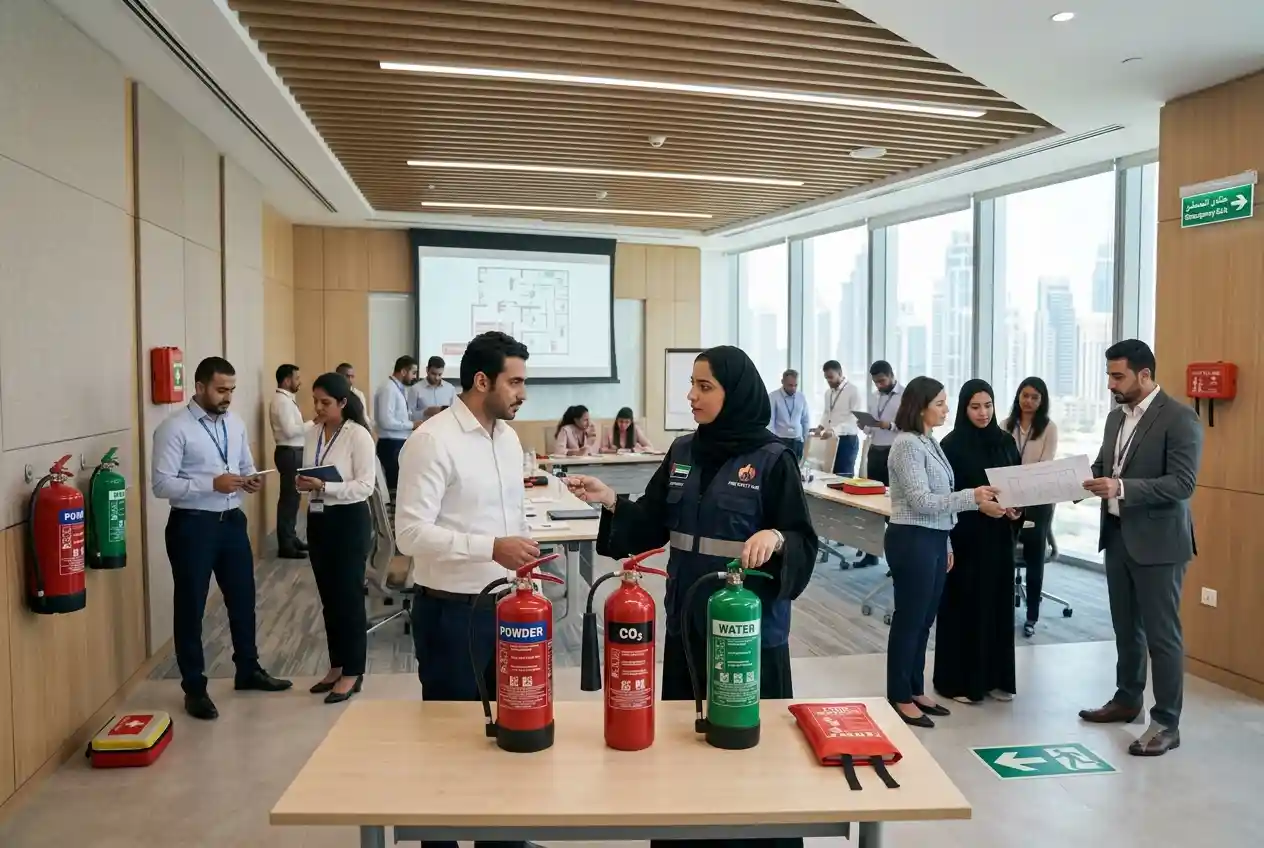

Fire incidents can occur in workplaces, residential buildings, educational institutions, industrial facilities, warehouses, hotels, and public venues. While prevention remains the primary objective, effective response during an emergency can significantly reduce risks to people, property, and business operations. This is why fire safety training has become an essential component of workplace safety programs throughout the UAE.
Organizations across various industries increasingly invest in employee safety education to improve emergency preparedness and create safer working environments. Fire safety training is often combined with programs such as EFST training, first aid training in Dubai, and sector-specific compliance courses to build a comprehensive safety culture.
What Is Fire Safety Training?
Fire safety training is designed to educate individuals on fire prevention, hazard identification, emergency response procedures, evacuation protocols, and safe workplace practices. The goal is to help participants understand how fires start, how they can be prevented, and what actions should be taken if a fire emergency occurs.
Training programs may vary depending on industry requirements, organizational policies, and workplace risks. However, most courses focus on practical awareness, emergency planning, and safe response procedures.
Why Fire Safety Training Is Important in the UAE
The UAE has experienced significant growth in commercial developments, residential communities, hospitality establishments, healthcare facilities, manufacturing operations, and large-scale infrastructure projects. As buildings and workplaces become more complex, fire safety awareness becomes increasingly important.
Fire safety training supports:
- Improved emergency preparedness
- Faster evacuation during emergencies
- Enhanced workplace safety awareness
- Reduced risk of fire-related incidents
- Better understanding of safety procedures
- Stronger organizational safety culture
Employers that prioritize safety training often create more resilient workplaces where employees understand their responsibilities during emergencies.
Who Should Attend Fire Safety Training?
Fire safety education is beneficial for individuals across many industries and professional roles. While some sectors have higher risk profiles, every workplace can benefit from trained personnel.
Office Employees
Corporate offices may appear low risk compared to industrial sites, but electrical equipment, kitchen areas, and building systems can still present fire hazards. Training helps employees understand emergency procedures and evacuation routes.
Construction Professionals
Construction environments often involve electrical systems, machinery, welding activities, and combustible materials. Safety awareness is critical for minimizing risks. Many professionals also pursue scaffolding inspector training in Dubai to strengthen their workplace safety qualifications.
Hospitality Staff
Hotels, restaurants, resorts, and entertainment venues host large numbers of visitors daily. Staff members benefit from understanding emergency response procedures and evacuation management.
Healthcare Personnel
Medical facilities require comprehensive safety planning due to the presence of patients, specialized equipment, and continuous operations.
Warehouse and Logistics Teams
Storage facilities often contain materials that require careful fire prevention measures. Employees working in inventory and distribution operations may complement their knowledge with WMS training to support safe and efficient warehouse management.
Core Topics Covered in Fire Safety Training
Most fire safety training programs include a combination of theoretical knowledge and practical awareness. Course content may vary depending on the provider and industry focus.
Fire Prevention Principles
Participants learn about common causes of workplace fires and strategies that help reduce risks before incidents occur.
Hazard Identification
Recognizing potential fire hazards is an essential skill that supports safer workplaces and more effective risk management.
Emergency Procedures
Training introduces structured response plans that help individuals react appropriately during fire-related emergencies.
Evacuation Awareness
Understanding evacuation routes, assembly points, and communication procedures is critical during emergency situations.
Fire Safety Responsibilities
Employees learn their roles within organizational safety frameworks and how they contribute to overall workplace preparedness.
Fire Safety Training and Workplace Compliance
Organizations often incorporate fire safety education into broader occupational health and safety initiatives. Depending on industry requirements, training may support compliance objectives, internal safety policies, and risk management programs.
Businesses that operate in food production and hospitality sectors frequently combine fire safety education with HACCP training in Dubai to strengthen operational safety standards across multiple areas of risk.
A proactive approach to safety can help organizations maintain business continuity while promoting employee well-being.
Benefits for Employees and Employers
Fire safety training provides advantages for both individuals and organizations. Employees gain practical knowledge that can help them respond confidently during emergencies, while employers benefit from stronger safety awareness throughout their workforce.
Key benefits include improved risk awareness, enhanced emergency preparedness, better communication during incidents, and increased confidence when following emergency procedures.
Organizations that invest in safety education often demonstrate a stronger commitment to employee welfare and operational excellence.
Career Advantages of Fire Safety Training
Safety-related qualifications can strengthen professional profiles across various industries. Employers increasingly value candidates who understand workplace safety principles and emergency response procedures.
Professionals pursuing career advancement often combine fire safety education with other recognized programs such as EFST training, first aid training in Dubai, and courses available through KHDA approved training institutes in Dubai.
These complementary qualifications demonstrate a commitment to professional development and workplace responsibility.
Choosing a Fire Safety Training Provider
Selecting a reputable training provider is important for ensuring a meaningful learning experience. Prospective participants should review course content, instructor experience, certification details, practical learning opportunities, and organizational reputation.
Individuals and businesses can also stay informed about national safety initiatives through resources provided by the Dubai Civil Defence, which plays a significant role in promoting fire safety awareness and prevention.
A quality training program should focus on practical understanding, real-world scenarios, and applicable workplace knowledge rather than theory alone.
Fire Safety as Part of a Strong Safety Culture
Modern organizations increasingly recognize that workplace safety extends beyond compliance requirements. Creating a culture of preparedness requires ongoing education, regular awareness programs, and employee engagement.
Fire safety training serves as a foundational component of this culture. When employees understand prevention strategies, emergency procedures, and safety responsibilities, organizations are better positioned to manage risks effectively.
As UAE industries continue to expand and evolve, investing in safety education remains an important step toward protecting people, supporting business continuity, and promoting operational excellence.
Key Takeaways
Fire safety training equips individuals and organizations with essential knowledge that supports prevention, preparedness, and effective emergency response. From offices and construction sites to hospitality venues and warehouses, fire safety awareness contributes to safer workplaces and stronger organizational resilience.
Whether you are seeking professional development or building a comprehensive workplace safety program, fire safety training remains a valuable investment in long-term safety and preparedness.