
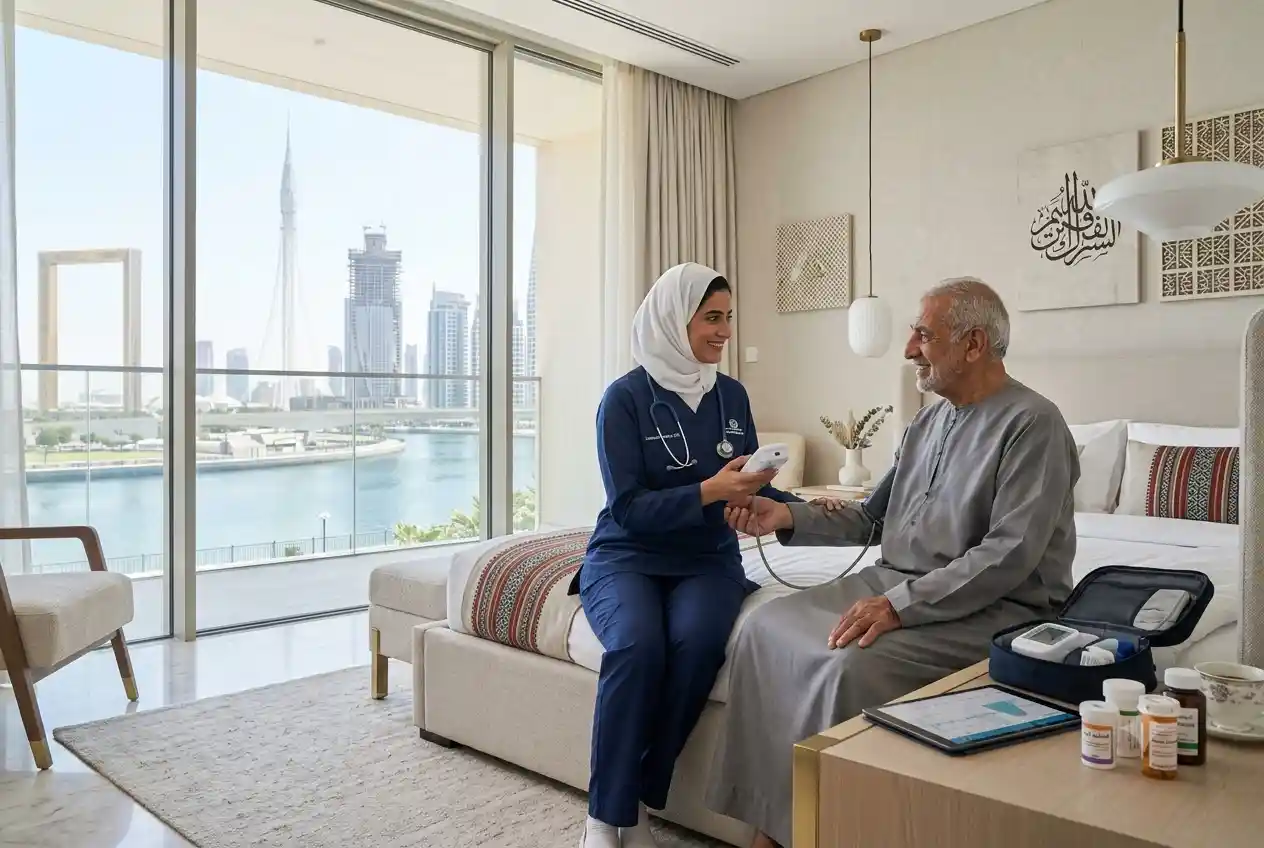

Home healthcare has become an important part of modern medical care in the UAE, giving patients the opportunity to receive professional treatment without remaining in a hospital for extended periods. As demand continues to grow, home nursing services are helping individuals recover comfortably while receiving personalized medical support in their own homes.
Whether someone is recovering after surgery, managing a chronic illness, caring for an elderly family member, or requiring regular medical monitoring, qualified home nurses can provide professional healthcare tailored to individual needs. Receiving care at home often improves comfort while allowing family members to remain actively involved throughout the recovery process.
This guide explains what home nursing services include, who can benefit from them, and the key factors to consider before choosing a licensed provider in the UAE.
What Are Home Nursing Services?
Home nursing services involve qualified nurses providing medical care at a patient’s residence. Unlike general caregiving, nursing services are delivered by trained healthcare professionals who perform clinical procedures, monitor health conditions, and support treatment plans prescribed by physicians.
Depending on the patient’s medical condition, nursing visits may be scheduled for a few hours, overnight care, or long-term support.
Who Can Benefit from Home Nursing?
Professional nursing care at home is suitable for patients of different ages who require medical assistance outside a hospital setting.
Common situations include:
- Recovery after surgery
- Elderly patient care
- Chronic disease management
- Post-hospital discharge support
- Patients with limited mobility
- Long-term medical conditions
- Palliative and supportive care
Every care plan is usually developed according to the patient’s health condition and recommendations from the treating physician.
Services Commonly Included
Licensed home nursing providers may offer a wide range of healthcare services depending on patient needs.
- Medication administration
- Vital signs monitoring
- Wound dressing and wound care
- Injection services
- Catheter care
- Post-operative monitoring
- Diabetes management
- IV therapy
- Health assessments
- Patient education
The exact services available depend on the provider and the patient’s treatment plan.
Benefits of Receiving Nursing Care at Home
Many patients recover more comfortably when surrounded by familiar people and environments. Home nursing also reduces the need for frequent hospital visits while providing one-to-one medical attention.
Some of the key advantages include:
- Personalized healthcare plans.
- Professional medical supervision.
- Improved patient comfort.
- Reduced travel to hospitals and clinics.
- Flexible scheduling.
- Closer family involvement.
- Continuity of care during recovery.
How Home Nursing Differs from Home Care
Although the terms are sometimes confused, home nursing focuses on clinical medical services delivered by licensed nurses, while home care may include non-medical assistance such as companionship, meal preparation, and support with daily activities.
If you’re comparing both options, our guide on home care near me explains the broader range of in-home support services available for families across the UAE.
Choosing the Right Home Nursing Provider
Selecting a qualified healthcare provider is one of the most important decisions for any family. Rather than focusing only on pricing, consider the provider’s experience, licensing, medical staff qualifications, and communication practices.
Before booking services, consider asking:
- Is the provider licensed by the appropriate health authority?
- What qualifications do the nurses hold?
- Can care plans be customized?
- Is emergency support available?
- How are patient records maintained?
- Will the same nurse provide ongoing care whenever possible?
When Is Home Nursing Recommended?
Doctors may recommend home nursing after hospital discharge or whenever ongoing medical supervision is required. Early planning helps ensure that patients continue receiving appropriate care without interruptions.
Patients recovering from orthopedic procedures, neurological conditions, or injuries may also require rehabilitation alongside nursing care. In these situations, our guide on physio at home Dubai explains how home physiotherapy can support long-term recovery.
Cost of Home Nursing Services in the UAE
The cost of home nursing services depends on several factors, including the type of medical care required, the nurse’s qualifications, visit duration, frequency of appointments, and the patient’s condition. Some providers offer hourly visits, while others provide daily, overnight, weekly, or long-term nursing care packages.
Before choosing a provider, request a detailed quotation that clearly explains the services included, any additional charges, and payment options. Understanding the complete care plan in advance helps families make informed healthcare decisions.
Preparing Your Home for Nursing Care
Creating a safe and comfortable environment can improve the effectiveness of home nursing. Patients should have a clean, quiet, and easily accessible space where nurses can perform medical procedures and monitor recovery.
Helpful preparations include:
- Keeping medications organized.
- Providing adequate lighting in the patient’s room.
- Ensuring emergency contact information is easily available.
- Removing potential trip hazards.
- Preparing any medical records the nurse may require.
Frequently Asked Questions
Are home nursing services available throughout the UAE?
Many licensed healthcare providers offer home nursing services across major cities and surrounding communities, although coverage may vary depending on your location.
Can home nurses administer medications?
Qualified nurses can provide medication administration and other clinical services according to the patient’s treatment plan and healthcare provider’s instructions.
Can elderly patients receive long-term nursing care?
Yes. Many providers offer ongoing nursing support for elderly patients who require continuous medical supervision or assistance managing chronic conditions.
How do I verify a nursing provider?
Always confirm that the healthcare provider is licensed by the relevant UAE health authority and employs qualified nursing professionals with appropriate experience.
Final Thoughts
Professional home nursing services provide patients with high-quality medical care while allowing them to remain in the comfort of their own homes. Whether recovering after surgery, managing a chronic illness, or supporting an elderly family member, qualified home nurses play an important role in delivering personalized healthcare tailored to individual needs.
Before selecting a provider, compare qualifications, licensing, available services, and communication practices to ensure your loved one receives safe and compassionate care. A trusted home nursing provider can make recovery more comfortable while giving families greater peace of mind.
If you’re looking to create a supportive home environment, you may also find our guides on home care near me, physio at home Dubai, and Etisalat home internet offers helpful for improving comfort, healthcare access, and everyday living in the UAE.
Types of Home Nursing Care
Home nursing covers a wide range of needs. Some patients require skilled medical care, such as wound dressing, injections, or monitoring of vital signs after surgery. Others need support with daily activities, including bathing, mobility, and medication reminders, particularly elderly patients or those with chronic conditions.
Specialised care is also available for conditions such as diabetes management, post-stroke recovery, and palliative support. Understanding which level of care is needed is the first step, and a professional assessment usually helps families choose appropriately rather than guessing.
How to Assess a Provider
When comparing home nursing providers, check that nurses are licensed and that the service is transparent about qualifications, supervision, and emergency procedures. Ask how care plans are created, how progress is reported to family members, and what happens if the regular nurse is unavailable.
References and reviews from other families offer useful insight, but a trial period is often the best test. Good providers welcome questions, adapt to feedback, and treat the patient with dignity and patience from the very first visit.
Supporting Recovery at Home
Recovery at home works best when the environment supports it. Clear walkways, good lighting, easy access to essentials, and a calm routine all help. Family involvement matters too: even small contributions, such as preparing meals or offering company, improve a patient’s mood and motivation.
Communication between the nurse, the patient, and the family keeps everyone aligned. Regular updates on progress, medication changes, and any concerns ensure that problems are caught early and that care evolves as the patient’s condition changes.
Frequently Asked Questions
What is the difference between home nursing and a caregiver?
Home nurses are trained healthcare professionals who can perform medical tasks, while caregivers generally assist with daily living activities without providing clinical care.
Can home nursing replace hospital care?
For many stable patients it can, especially for recovery and chronic care, but acute or unstable conditions still require hospital treatment.
How are care plans decided?
A nurse or care coordinator usually assesses the patient first, then builds a plan around medical needs, daily routines, and family input.
Is home nursing available around the clock?
Many providers offer flexible schedules, including part-time visits and 24-hour care, depending on the patient’s needs.
Related Reading
- Enaya Home Nursing Services: Understanding Professional Home Healthcare Support
- Ali Home Services in UAE: Complete Guide to Home Solutions & Convenience
- 10 Marla Home Design: Modern Layout Ideas, Floor Plans, and Features
Making the Most of What You Have Learned
The ideas in this guide work best when they are applied steadily rather than all at once. Start with the step that feels easiest, build it into your routine, and add the next one once it feels natural. Progress in health, learning, travel, and business alike comes from consistent small actions repeated over time, not from dramatic changes that are hard to sustain. Keep notes on what works for you, revisit your goals regularly, and do not hesitate to seek professional advice when a decision carries real consequences. With patience and a practical approach, even a topic that once seemed complicated becomes manageable, and the benefits compound quietly in the background of everyday life.
